
Boat · Demonstrator

The full-scale demonstrator of the BIUTOPIC system: a restored Renaud 8000 (1987) being transformed into a shared scientific base. Through its EXO-01 exoskeleton, it is designed to become solar, electric and silent. Operated by a qualified crew — participants take part in navigation under supervision.
At a glance
- What
- Retrofitted barge · solar-electric exoskeleton
- Where
- Erdre riverbanks, Nantes
- When
- Commissioning · in preparation
- Who
- BIUTOPIC SAS · ESS / ESUS-oriented
- How
- Qualified crew · up to 10 participants
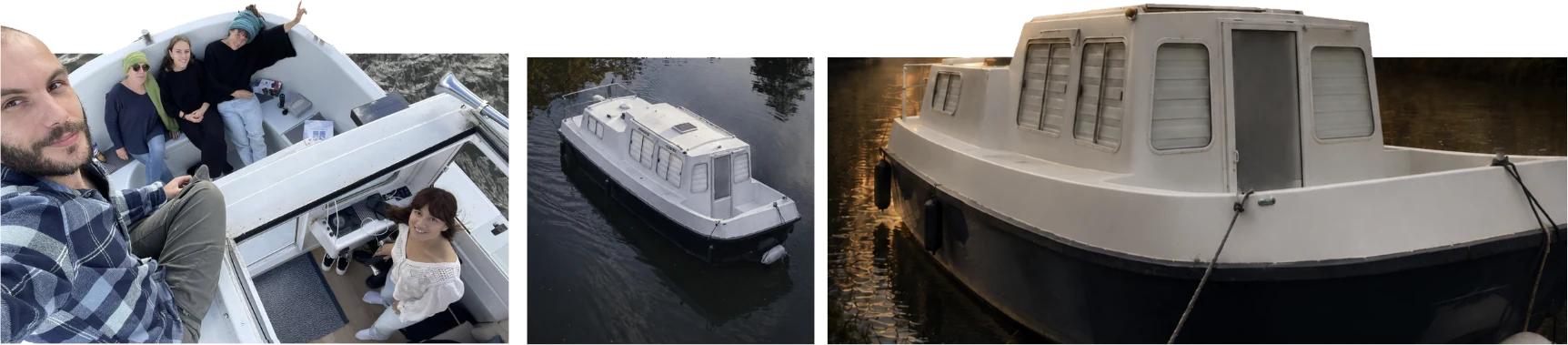
On board
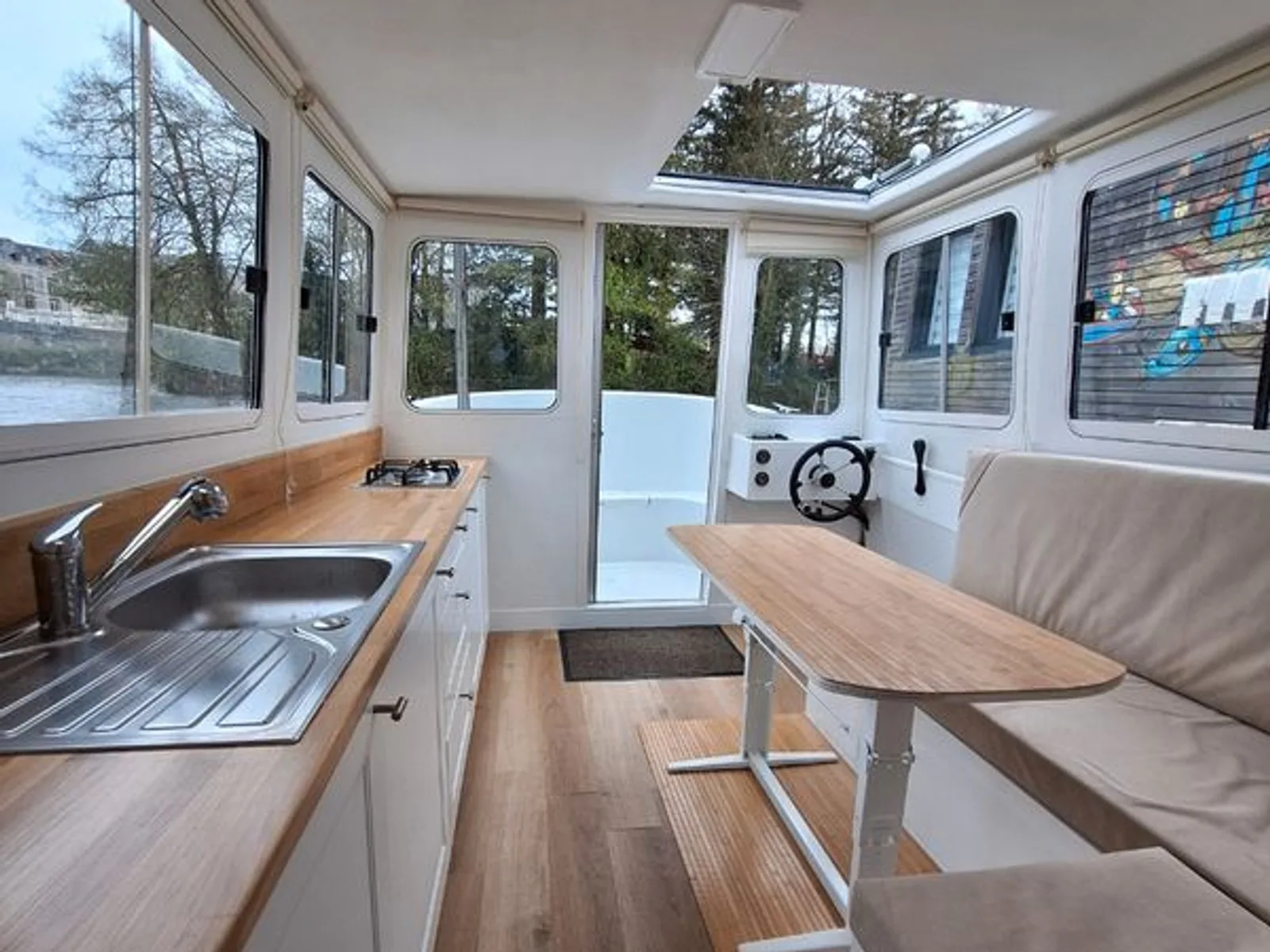
Specifications
- Size 9 m × 4 m · 8 m × 3 m hull
- Category Category C · Division 240
- Licence Licence held by the crew — helm under supervision
- Capacity 10 participants
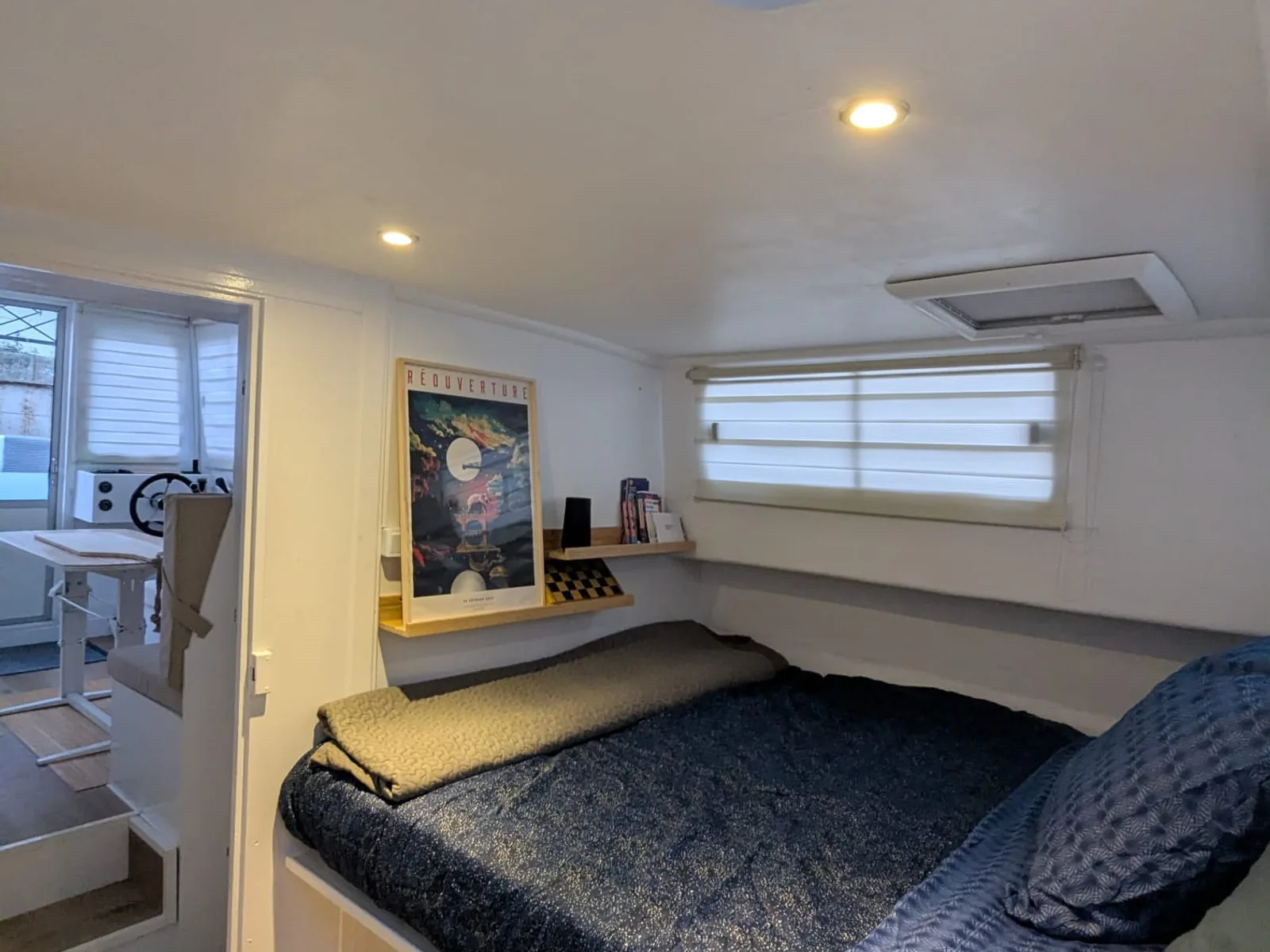
- Sleeping 1 double cabin · convertible saloon
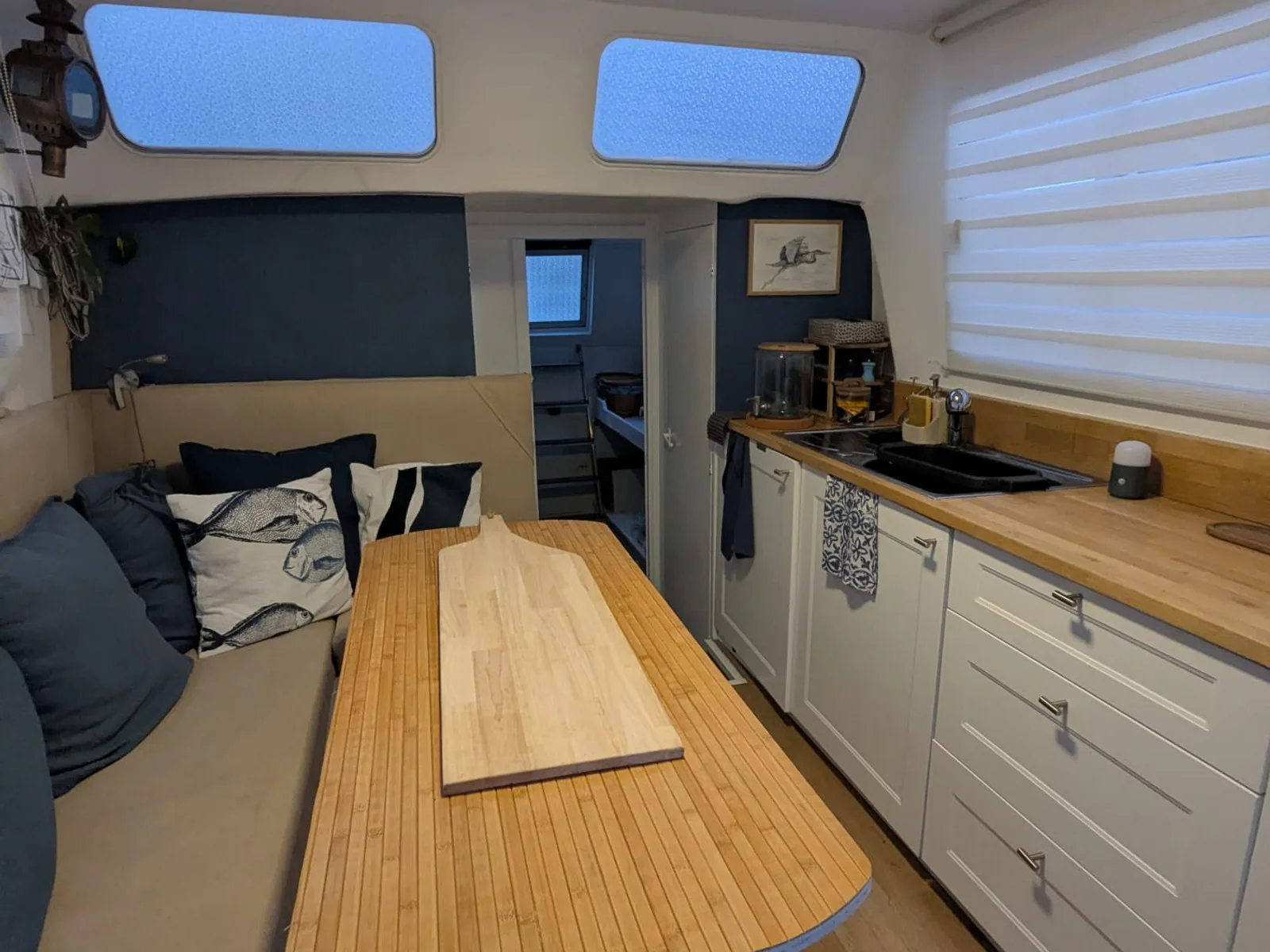
- Galley Equipped galley
Navigation
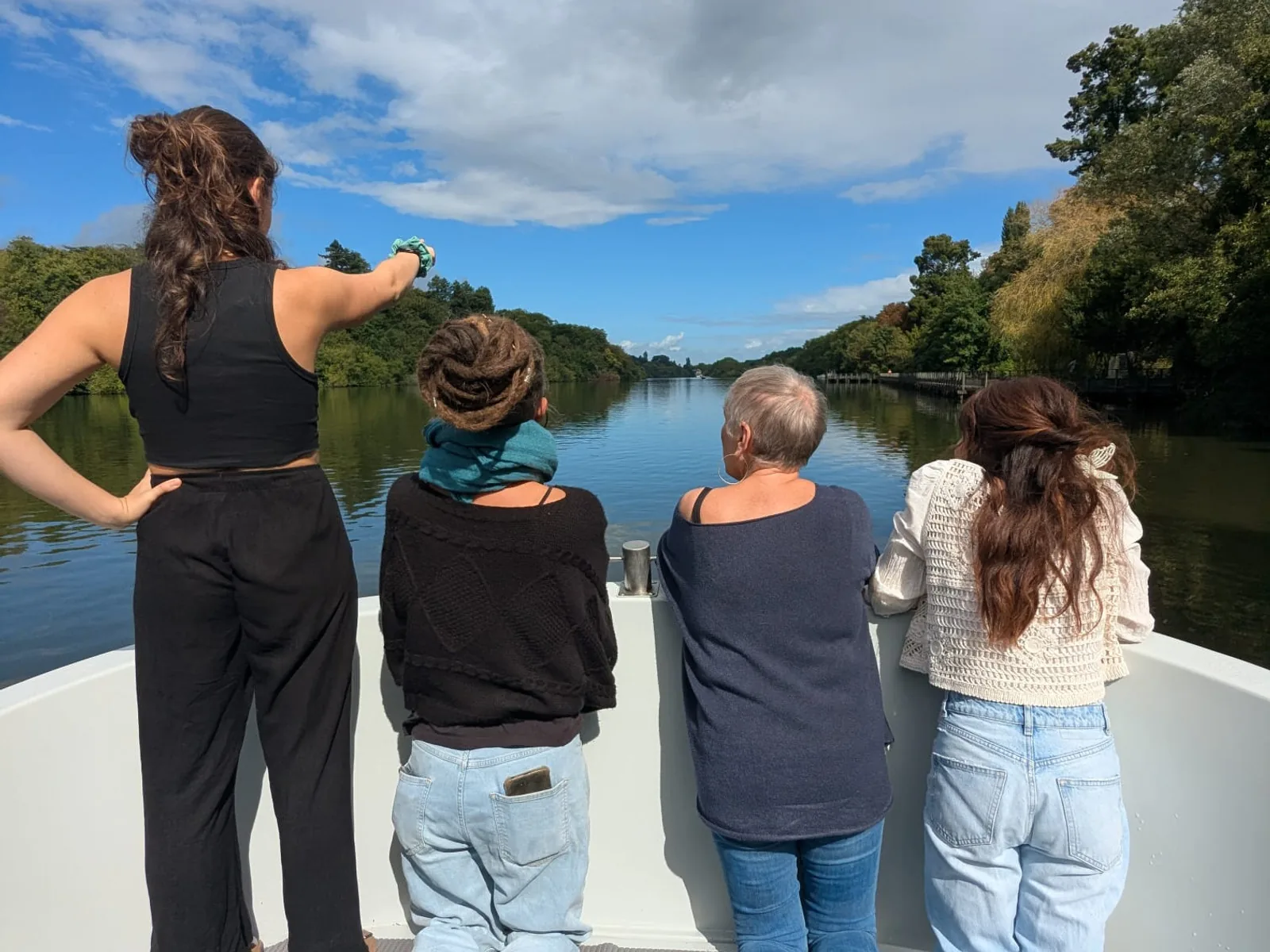
The Erdre winds north of Nantes — « la plus belle rivière de France » — before joining the Nantes-Brest canal. Fifteen kilometres through Natura 2000: herons, kingfishers, otters, over 200 bird species. Twenty-two châteaux line the banks.
Where the boat stands
What exists
- Restored Renaud 8000 hull (1987)
- Physical boat available
- Restoration work completed
- Base fit-out — saloon, cabin, galley
Being integrated
- EXO-01 exoskeleton — solar energy and electric propulsion
- Scientific equipment and sensors
- Regulatory and insurance preparation
- Mooring and operating framework
Future potential
- Floating scientific base
- Environmental missions and citizen science
- Public navigation and engagement
- Research residencies · media production
- Support for autonomous platforms

Plate · Symbiosis 03 · The wreck-reef
An abandoned hull can become a reef: life settles in, and the hull protects what surrounds it.
This 1987 Renaud 8000 follows that path — restored rather than replaced, it becomes a support for research and for life.
A platform for aquatic resilience
L'Hydronaute is designed first and foremost for scientific research and environmental monitoring. Its regular presence on inland waterways can also contribute to aquatic resilience: early pollution detection, environmental assessment, risk prevention and rapid situational awareness.
Once an appropriate legal and operational framework is established, the platform may also provide technical and scientific support to the competent authorities during public-interest operations — its scientific mission may then be temporarily interrupted whenever an urgent situation requires priority support.
- Environmental monitoring
- Pollution detection & assessment
- Risk prevention
- Rapid situational awareness
- Scientific support during incidents
- Support to competent authorities · under formal agreements
Safety by design — today: crew training, operational risk assessment · in build with EXO‑01: redundant electric propulsion, precise low-speed manoeuvrability, communications and observation equipment · envisaged: thermal imaging, sonar, drones, emergency equipment.
BIUTOPIC is not a rescue service and claims no partnership with any emergency service — any support would take place under a formal agreement.
Frequently asked questions
- Do I need a boat licence?
- A licence is required for this vessel — and it is held by the qualified crew on board. You need no personal licence: you can take the helm and take part in mission control under the operator's supervision, when conditions allow.
- Is this a tourist trip?
- No. L'Hydronaute is a shared research platform, not a pleasure boat. Every navigation carries real scientific work — measurements, sampling, technology trials — and participants contribute to it. Research always takes priority.
- What do you actually do on board?
- Depending on the mission: environmental observations, water-quality measurements, supervised sampling, use of sensors, mission planning, supervised interaction with the HYDRO-01 autonomous platform, reading the collected data and exchanges with the team. A typical day follows the sequence board, observe, measure, sample, contribute to the data.
- How many people can come aboard?
- Up to 10 participants — the vessel is registered for 12 passengers, so the operational capacity keeps a margin. L'Hydronaute is 9 m × 4 m with the exoskeleton — there is room. The configuration for receiving the public was validated with the DDTM.
- What does it cost?
- For citizen science, the recommended contribution is €35 for around 2 hours, goûter included — a solidarity model: giving more offers someone else a place, giving less remains possible. For researchers, access to the shared infrastructure is €150 excl. VAT per researcher per day. These are 2026–27 early-stage ESUS rates, and no payment is taken before the mooring framework is confirmed.
- Where do you sail?
- On the Erdre, north of Nantes. Fifteen kilometres inside a Natura 2000 area, twenty-two châteaux along its banks, called “the most beautiful river in France” by François I. The navigation area will be confirmed when commissioning is.
- Can I book already?
- Not yet. Commissioning is in preparation, subject to final validation of the technical configuration, insurance and the temporary occupation permit (AOT). No booking and no deposit are taken at this stage. Write to us to be notified when it opens — those who sign up get the dates first.
The boat is restored. Integration of EXO‑01, the technical configuration, insurance and the mooring framework are being finalised. Sign up to be notified when the first sailings open.
Citizen science — recommended contribution €35 ·
approximately 2 hours · goûter included (2026–27
early-stage ESUS rate · at opening, subject to the mooring
framework)
Take part in a real working research platform — not a staged
demonstration. Every mission is different and research always takes
priority. Up to 10 participants (vessel registered for 12 passengers).
Public reception: configuration validated with the DDTM.
Play → Plan → Navigate → Measure → Contribute
- Navigation & mission control
- Water-quality measurements
- Sampling
- Biodiversity observation
- Hydroacoustics
- HYDRO-01 interaction
- Meeting the researchers
Pay what feels right around the recommended amount: giving more offers someone else a place, giving less leans on the generosity of others.
Participation in navigation and mission control happens under the supervision of the qualified operator, where operationally appropriate — and can start today in simulation with Trashure Island.
No payment or deposit is taken until the mooring framework and insurance are confirmed.
Or directly: hydronaute@biutopic.com
TECHNICAL DOSSIER · HISTORY
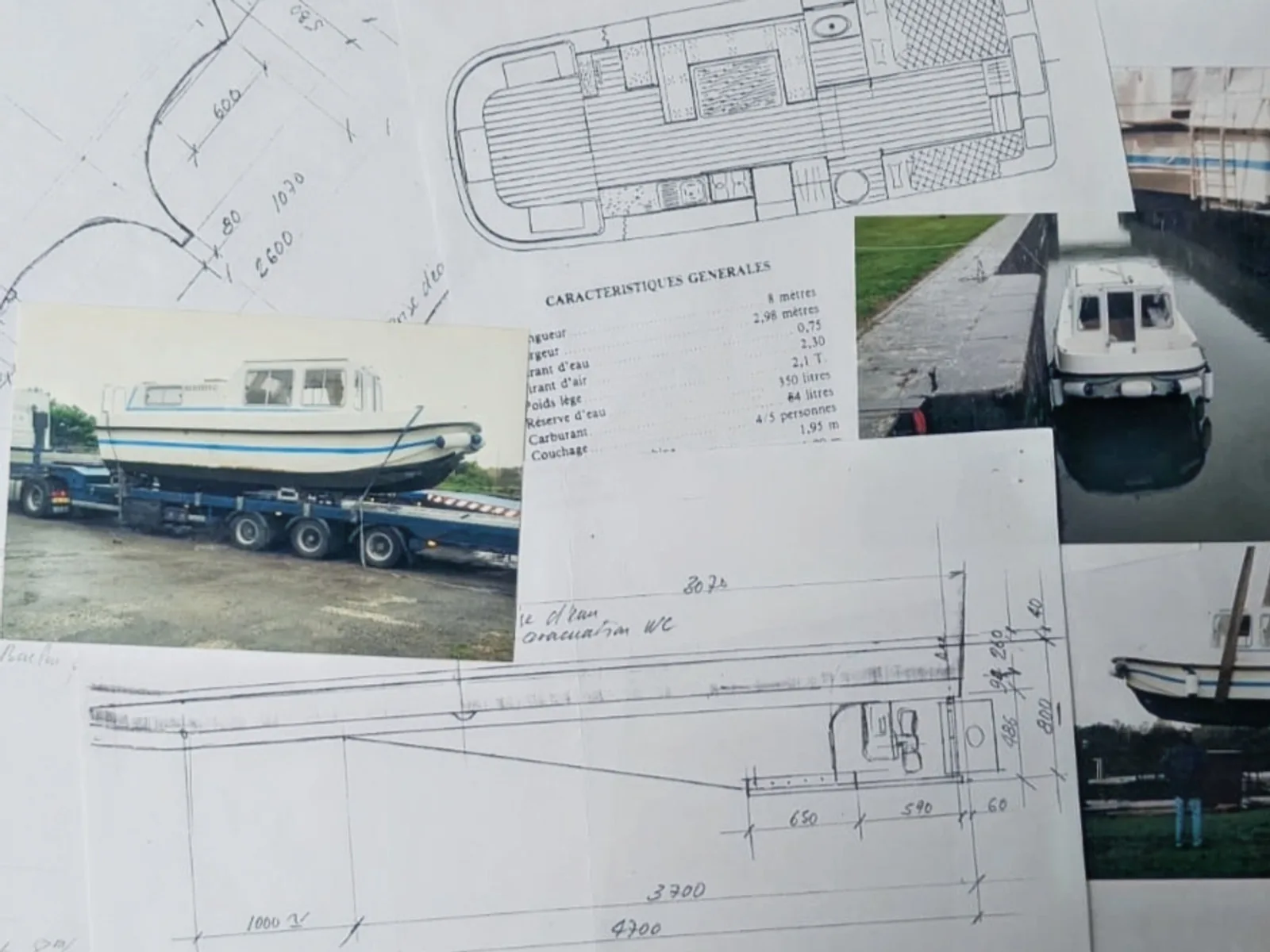
Original blueprints, general characteristics sheet and delivery photos — Renaud 8000 barge (1987), 9 m × 4 m with the exoskeleton, Category C.
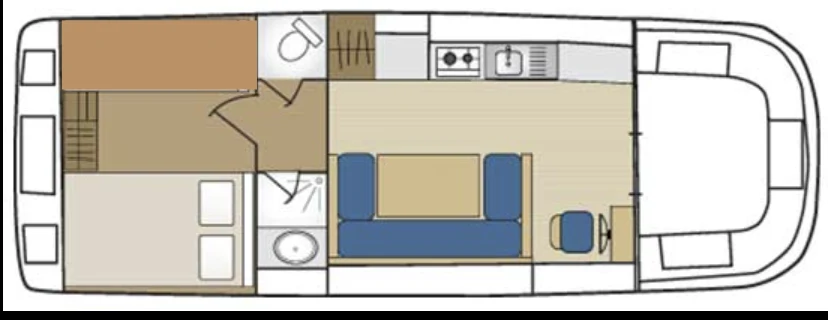
Layout — convertible saloon, equipped galley, double cabin and helm station.