
EXO‑01
The modular
nautical exoskeleton.
EXO‑01 is a reversible structure developed to turn an existing hull into an energy, science and operations platform — without building an entirely new boat. A modular external structure that adds electric propulsion, energy, sensors and mission equipment to an existing vessel. EXO‑01 is the first experimental platform of the HYDRONAUTE programme.
Concept
EXO-01 is a modular and above all retrofit exoskeleton platform: rather than building new, the X-braced structure on floats — assembled and dismantled at will — equips and transforms what already exists, wherever aquatic environments need intervention, maintenance and environmental operations.
This approach directly embodies Biutopic's values: regenerate rather than replace, optimise what already exists rather than extract new resources.
The modular nautical exoskeleton is designed to interface with different types of vessels and expand L'Hydronaute's capabilities — research, environmental operations and, in time, public-interest missions. Its potential assistance and stabilisation functions remain subject to technical validation, operating limits and appropriate crew training. The prototype is in build — first trials expected in September 2026.

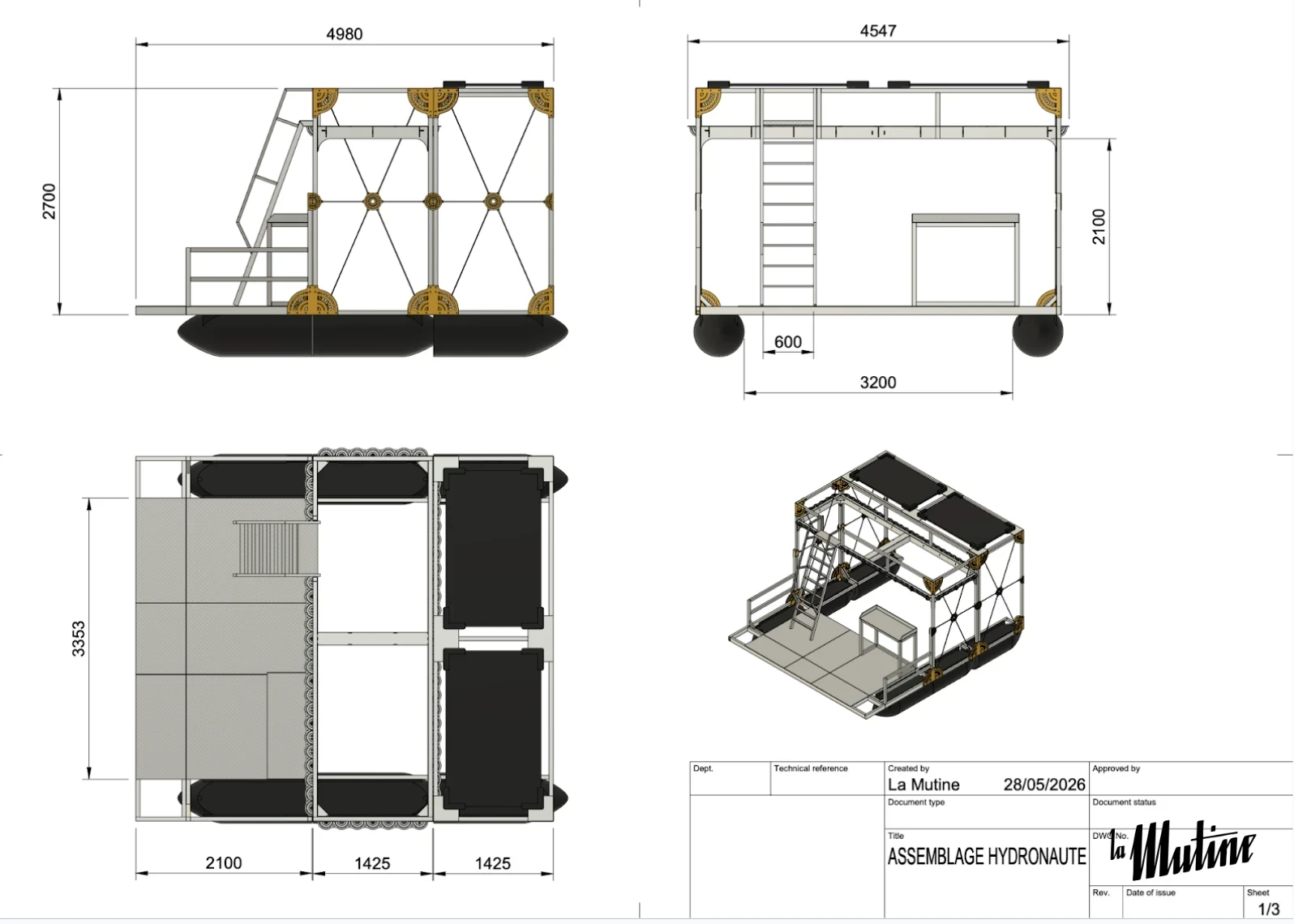
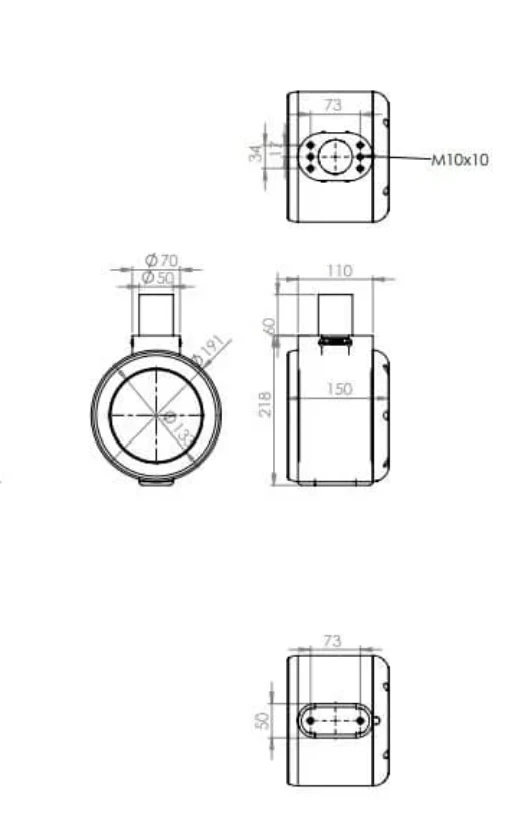
Manufacturer document — Rim Drive Technology
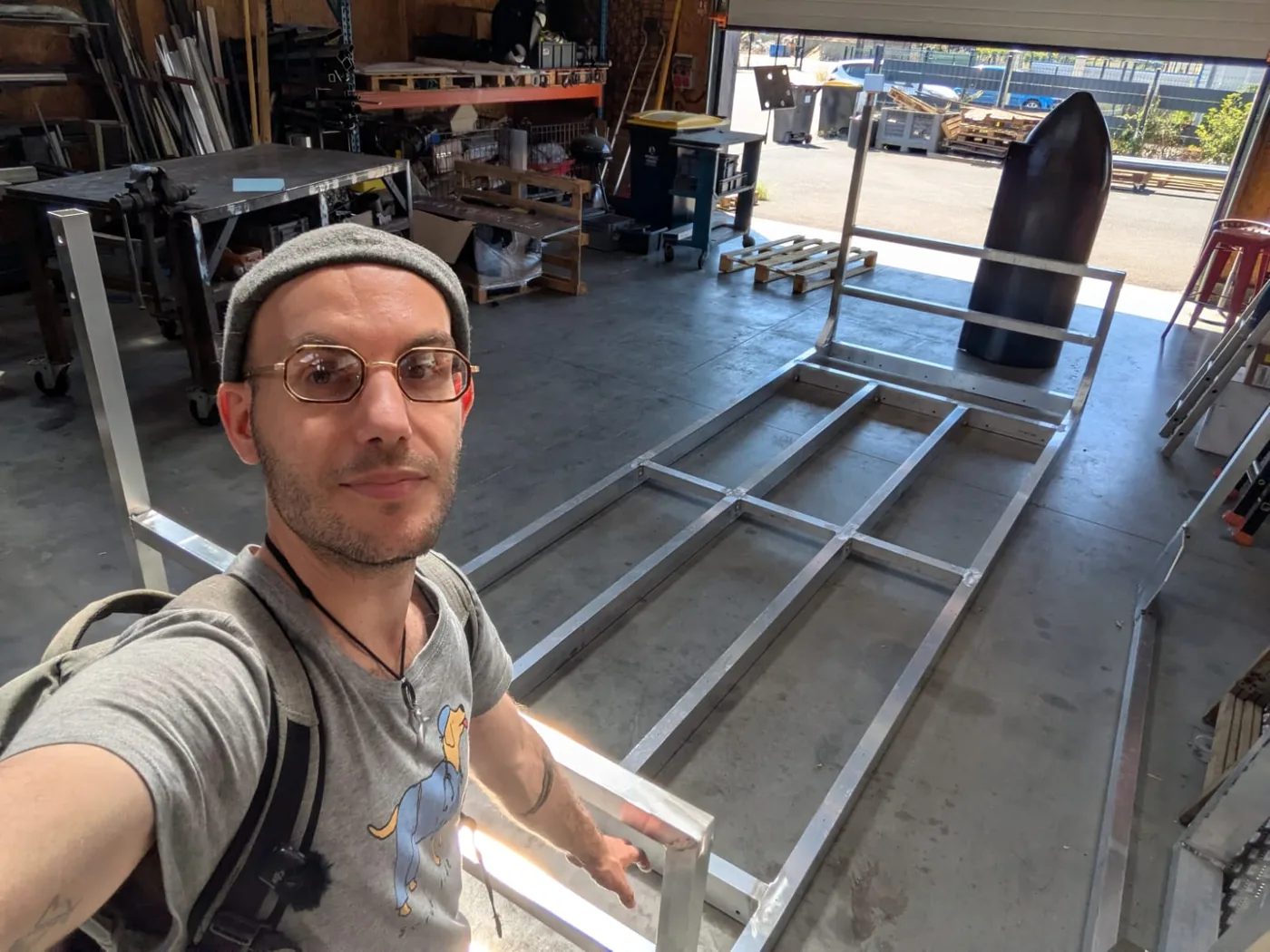
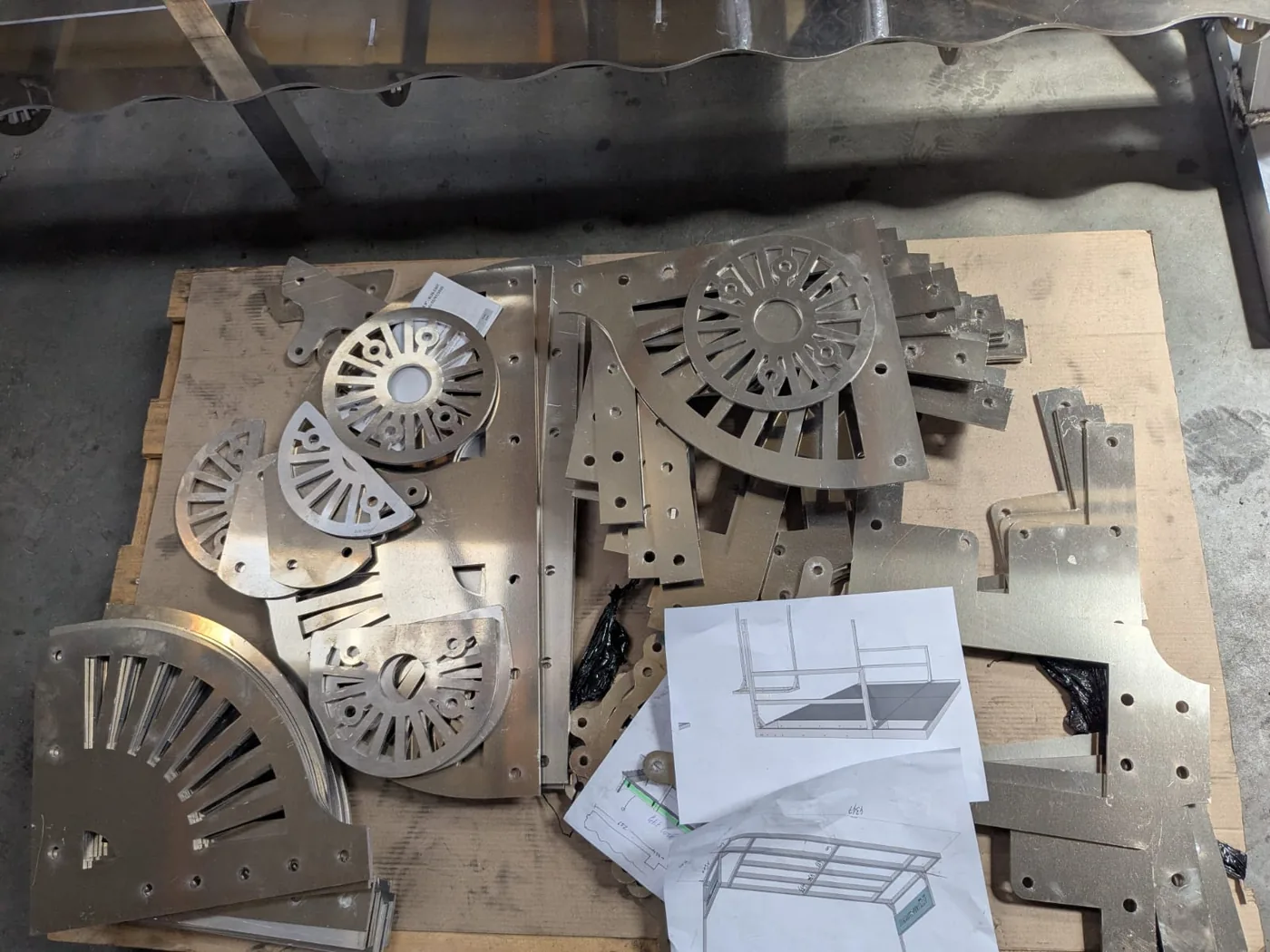
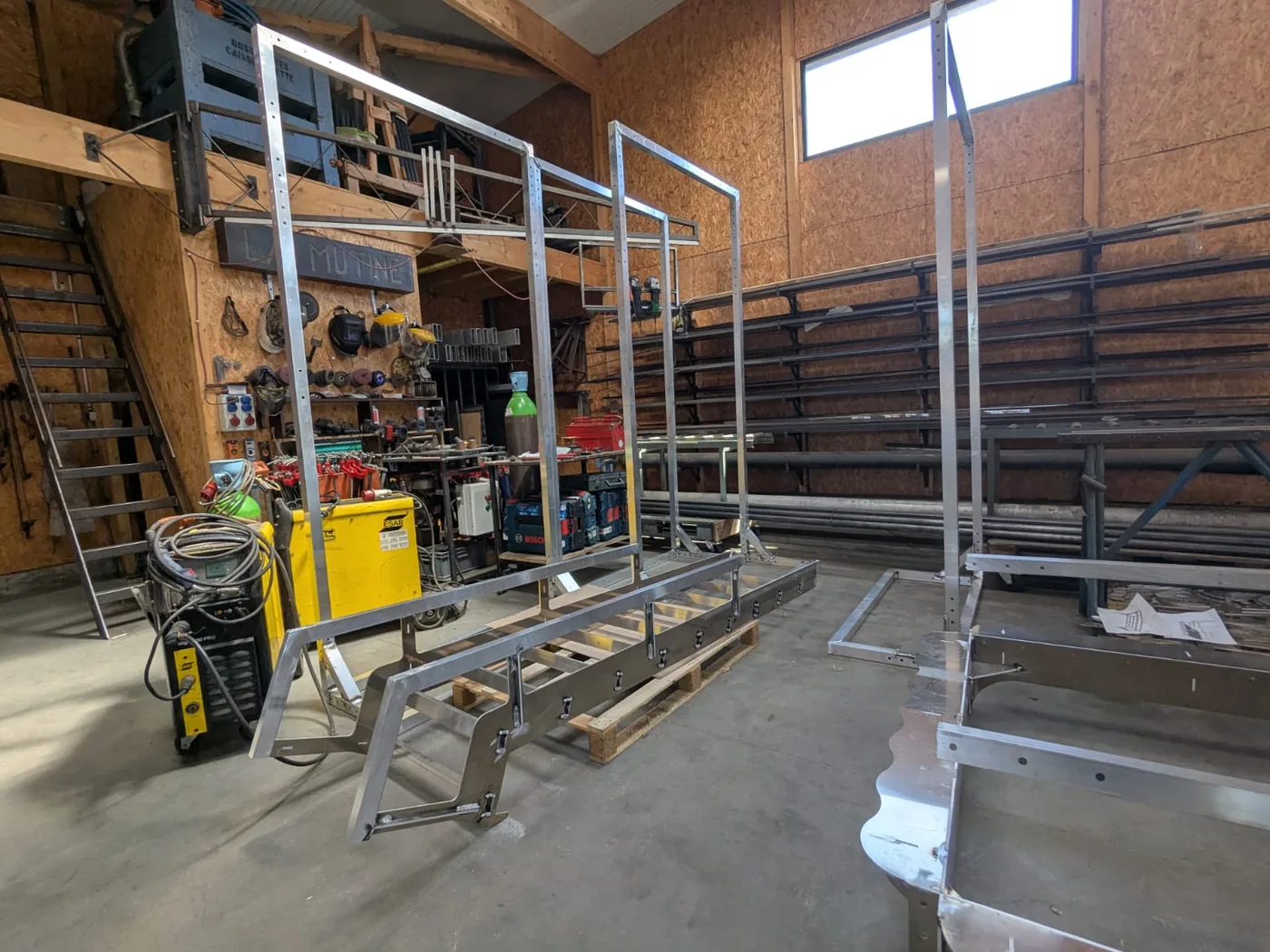
Design & fabrication Arpi Mangasaryan Architecture, design & research Antoine Marine fabrication & structures · La Mutine Maxime Prototyping & integration · La Mutine → the crew
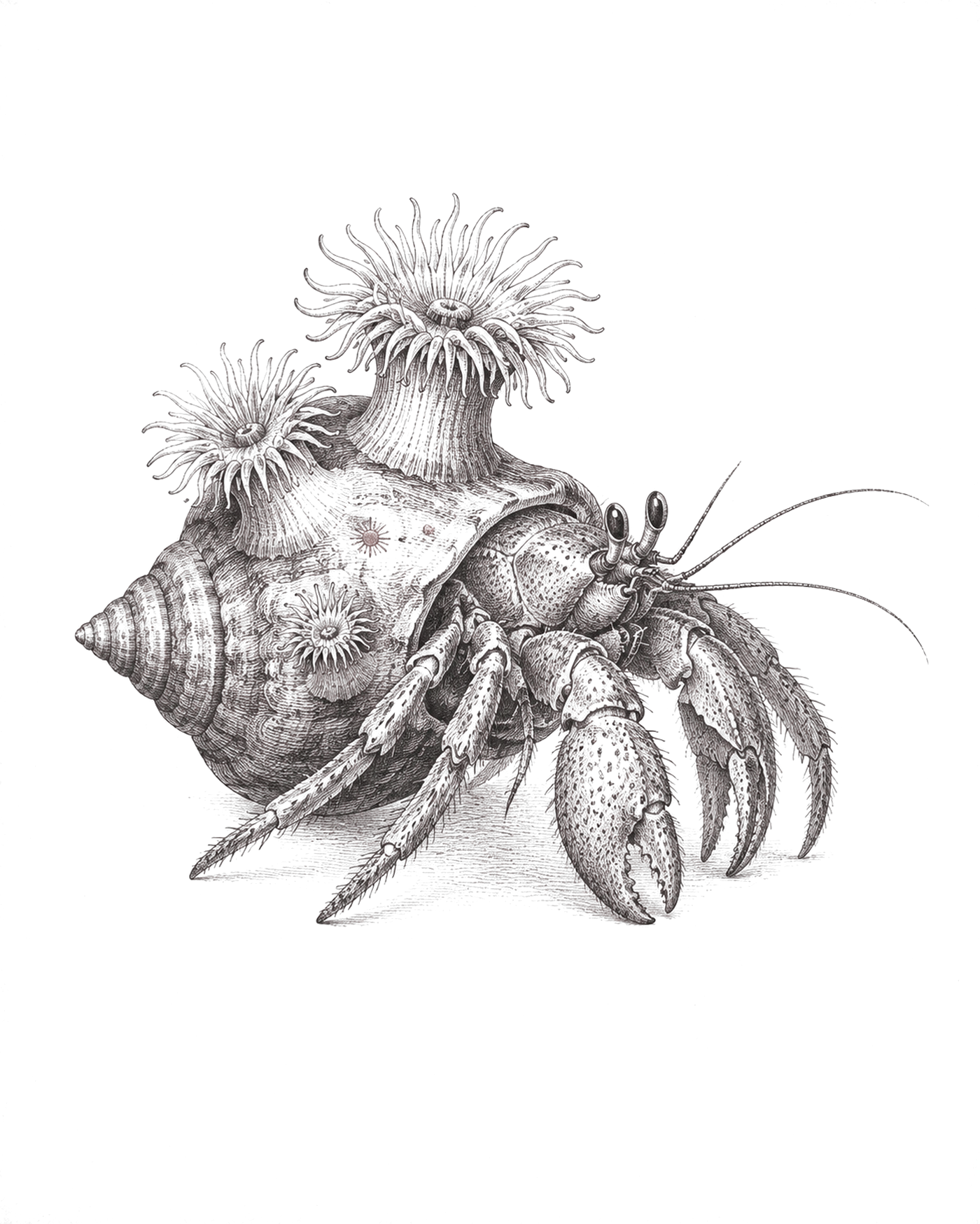
Plate · Symbiosis 01 · Pagurus & Calliactis
Some hermit crabs fix sea anemones onto their shell: the anemones protect them, the crabs carry them — and when they change shells, they take them along.
EXO‑01 works the same way: a structure that settles onto an existing hull, brings it energy and new capacities, and stays reversible.
Intended architecture · Envisaged functions
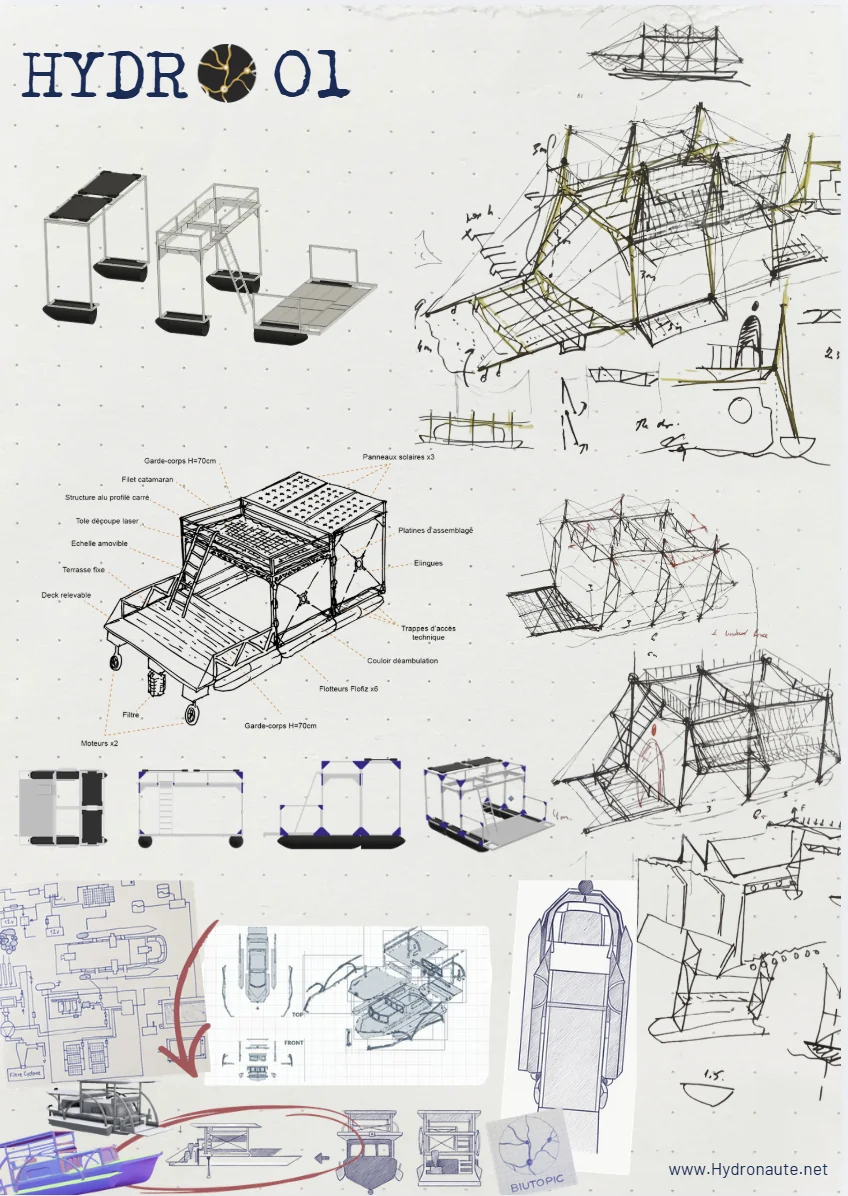
The intended architecture can integrate all technical systems into a unified structure, designed to be assembled and disassembled without any permanent modification to the original hull. The prototype is in development — each function is validated in stages.
- 01 Solar panels
Renewable energy generation while underway and at mooring. Surface area optimised for sun exposure and electrical load.
- 02 Batteries
Energy storage to ensure propulsion range and power supply for scientific instruments throughout the voyage.
- 03 Electric drivetrain
Envisaged integration of electric propulsion and navigation- assistance functions, subject to technical validation.
- 04 Onboard electronics
Perception and assistance modules based on artificial intelligence may be tested as they are integrated and validated.
- 05 Lateral stability floats
Provide stability during sampling and scientific analysis manoeuvres, or when carrying heavy instrument loads.
- 06 Scientific instruments
Modular space for research equipment — sensors, samplers, analysers — swappable to match each study protocol.
Microplastic filtration
A hydrocyclone filtration system.
Among the envisaged scientific instruments, a hydrocyclone is part of a sampling chain: water intake, particle concentration through separation, collection, then analysis on board or in a laboratory.
The hydrocyclone uses centrifugal force to separate particles by density — no mechanical filter to replace, no chemicals. Performance depends on configuration, flow rate, particle size and density, and water conditions. Collected samples are intended to feed an open database on plastic pollution in inland waterways.
Approach
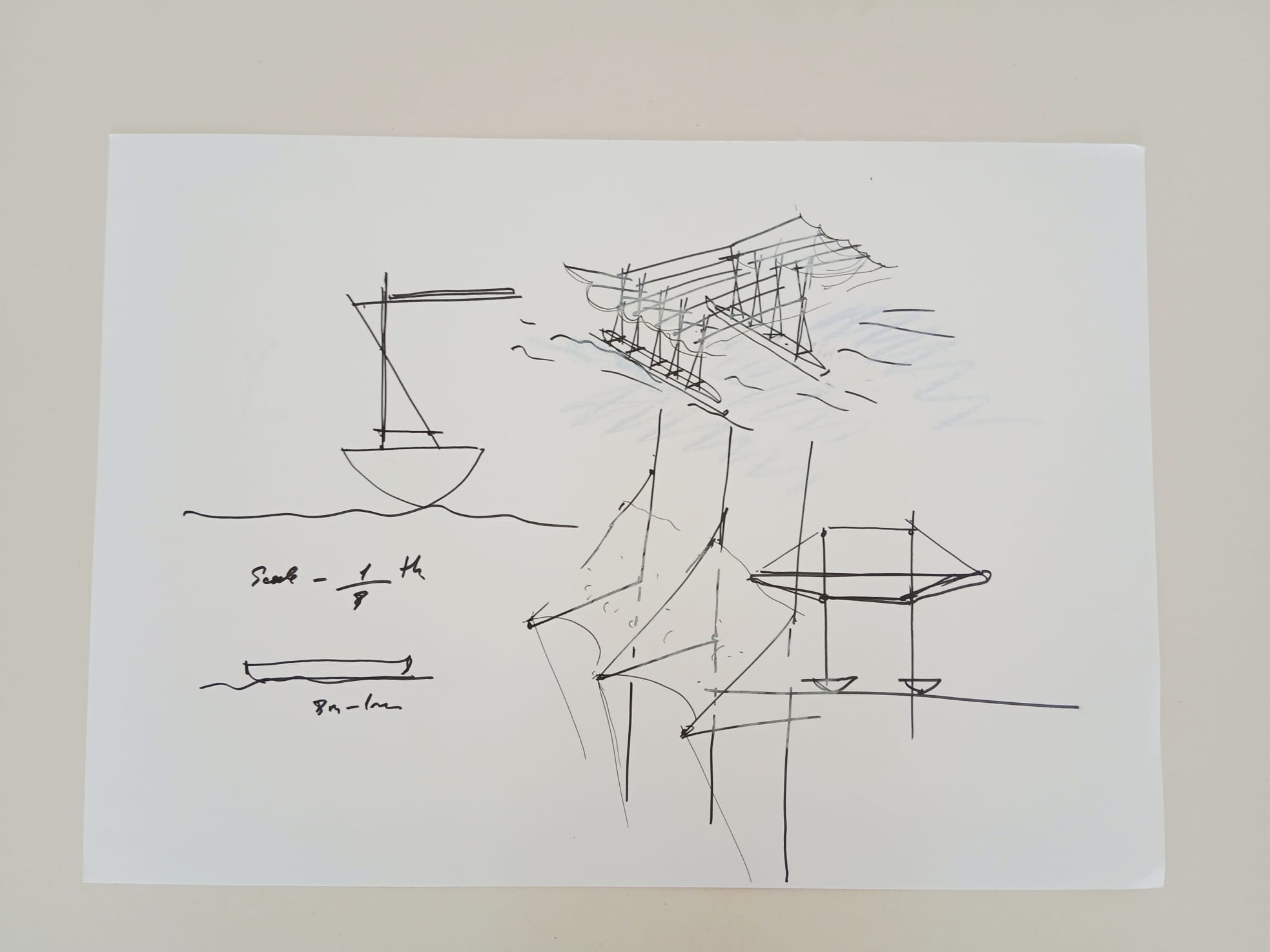
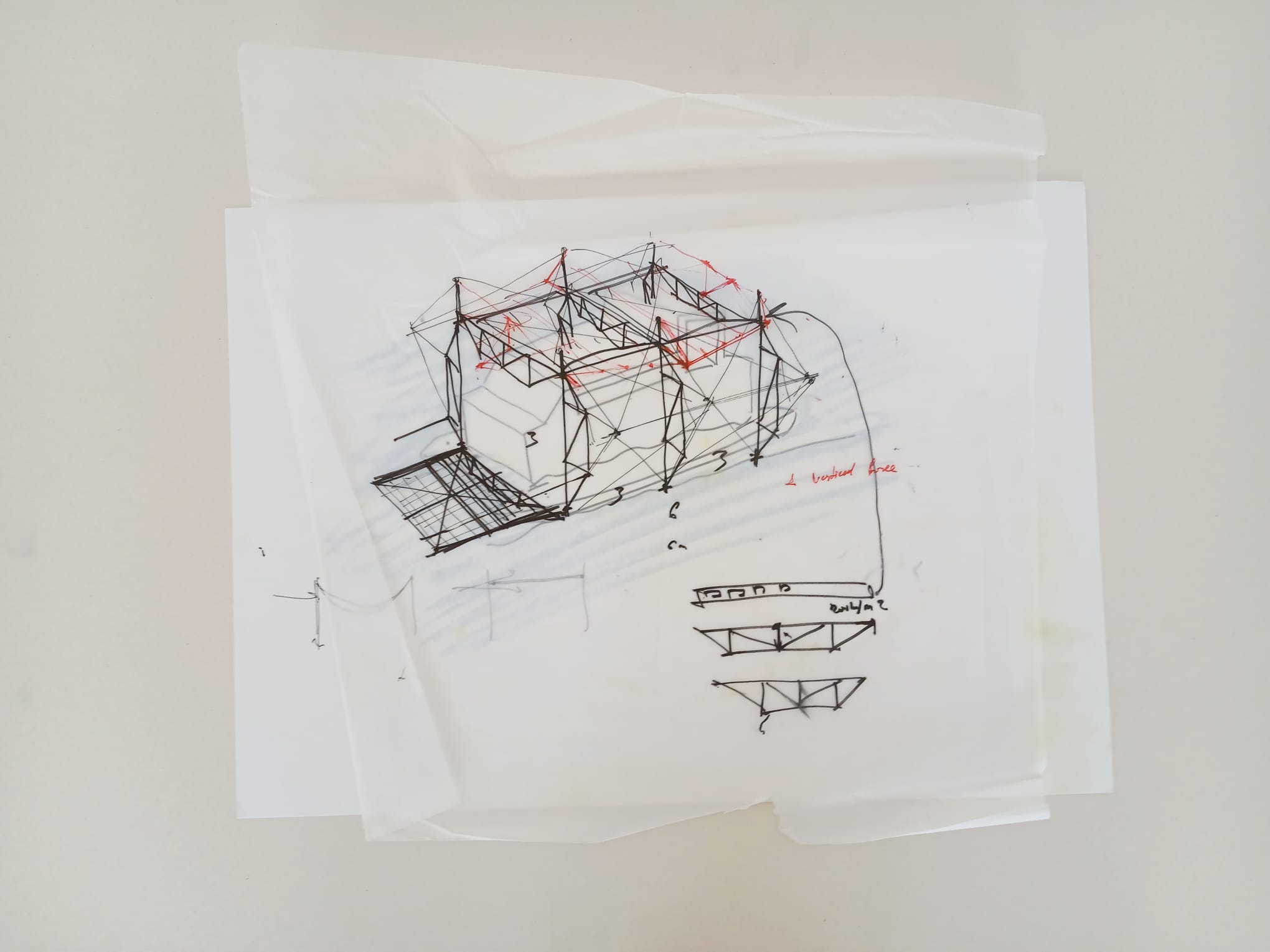
Design sketchbooks
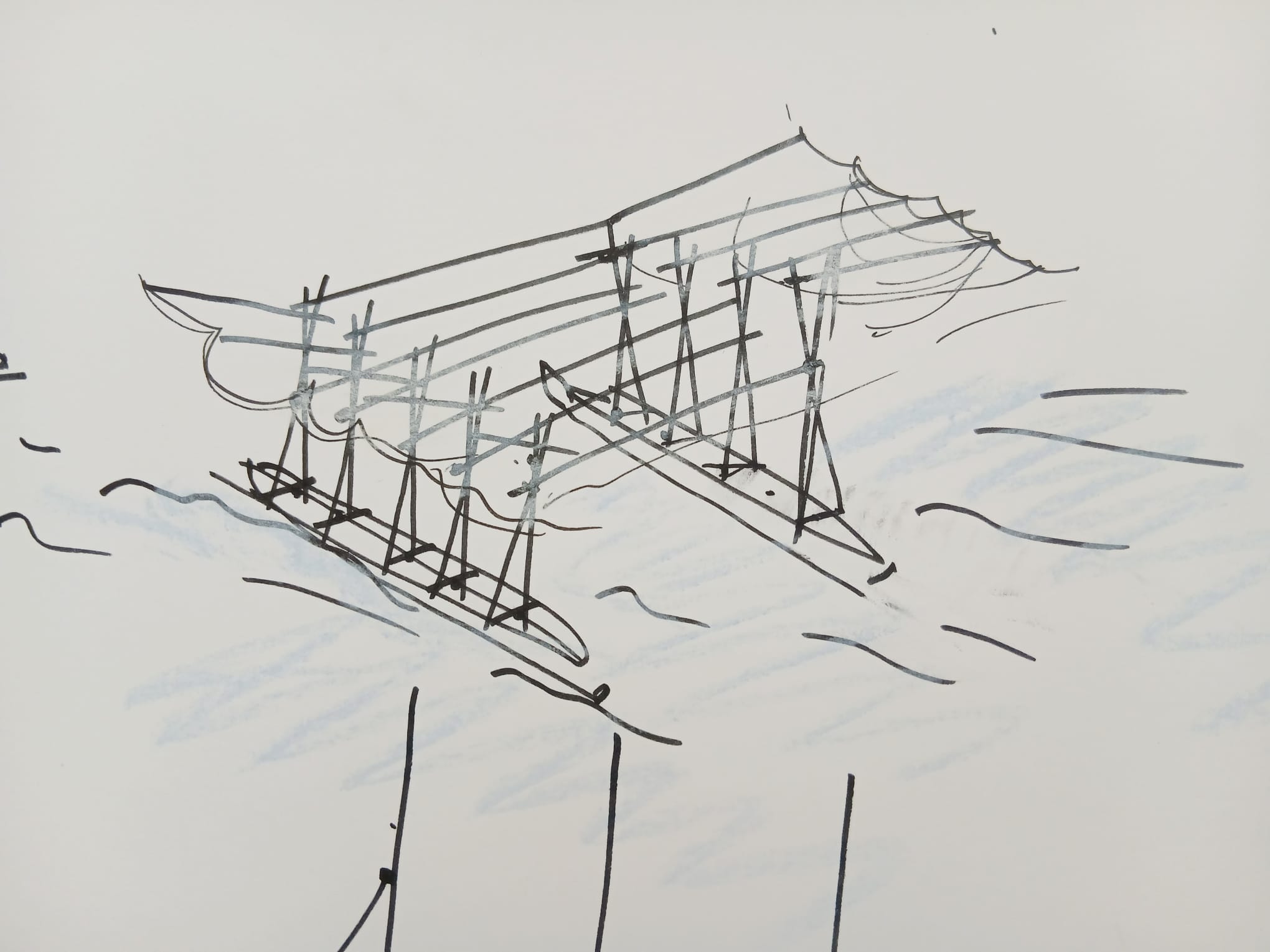
The exoskeleton was born on tracing paper — hundreds of sketches, overlays, and reconsiderations. These pages are the work of Arpi Mangasaryan, architect and researcher at the heart of the project.
Timeline
From spec to launch.
Prototype phase — workshop fabrication (July 2026).
-
01 · Early April → mid-April Done
- Project kickoff
- Drafting & sign-off of the technical specification
-
02 · Mid-April → mid-May Done
- Design · 3D modelling
- Construction drawings
- Hardware sourcing
-
03 · Mid-May → end of May Done
- Simulation · engineering-office submission
- Adjustments · engineering-office sign-off
- Fabrication drawings
- Raw-material order
-
04 · Early July → end of July In progress
- Workshop fabrication
- Flotation tests
- Adjustments
-
05 · Next Upcoming
- Delivery
- Final assembly — awaiting mooring permit (AOT)
The exoskeleton is not a technological gadget. It is a demonstration that technology can serve the living world — lightweight, sober, and reproducible.