
Logbook EXO-01 · BIUTOPIC × La Mutine
EXO-01: from tracing paper to an aluminium chassis, at La Mutine's workshop
EXO-01 is an external, reversible structure designed to convert existing boats into electric, instrumented platforms. In May 2026 the assembly was drawn. In July the aluminium chassis was going up in La Mutine's workshop in Nantes.
Equip what already floats
Building a new electric boat means adding one more hull to the world. EXO-01 takes the problem the other way round: an X-braced structure on floats, assembled and dismantled, that couples to an existing hull with adjustable self-locking lines. It is designed to fit from the outside, without modifying the hull and without taking the boat out of the water.
The first boat set to receive it is L'Hydronaute, a 1987 Renaud 8000. EXO-01 is the demonstrator; the next aim, EXO-02, is river freight, then the sea.
On tracing paper, a variant
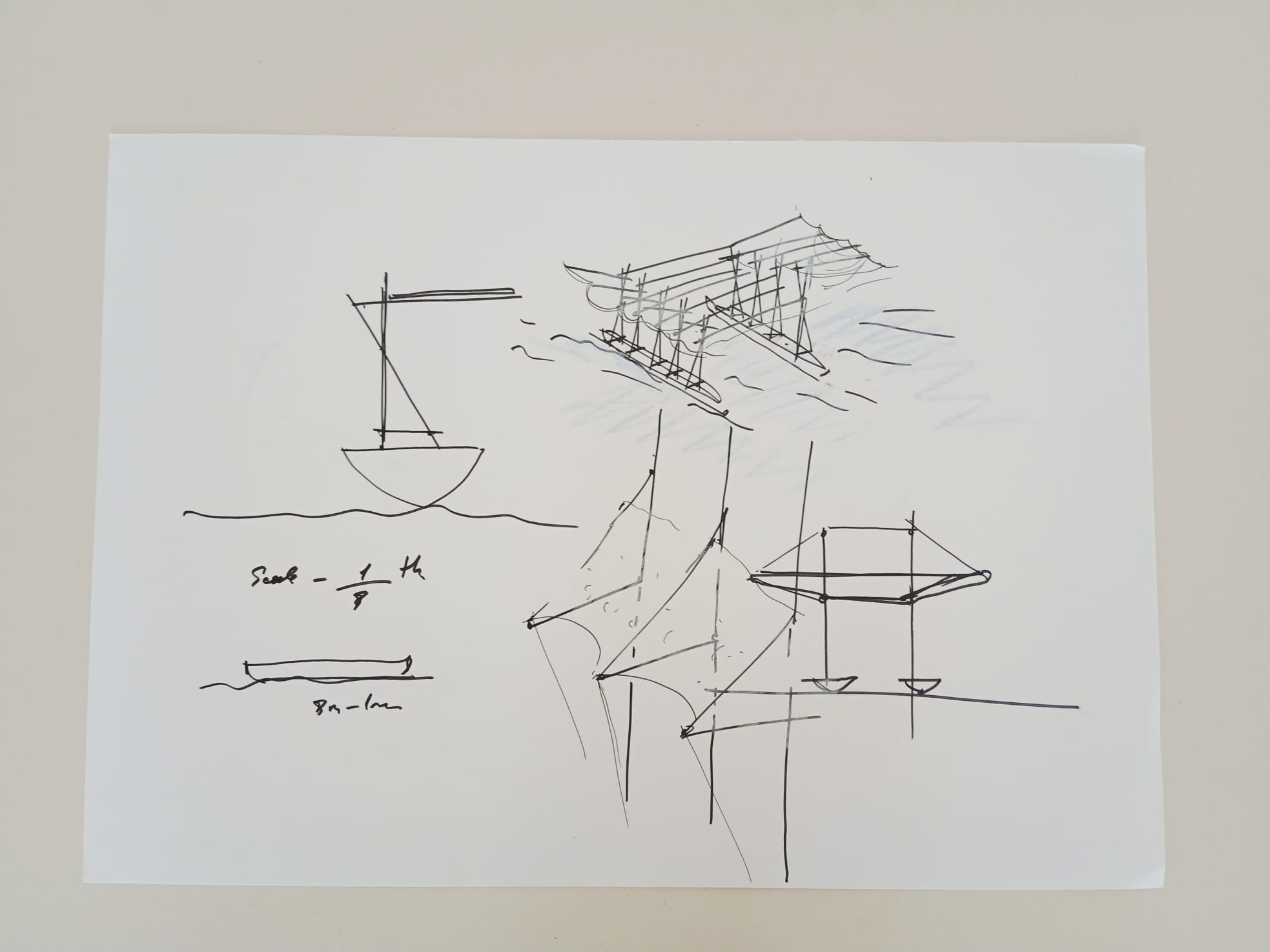
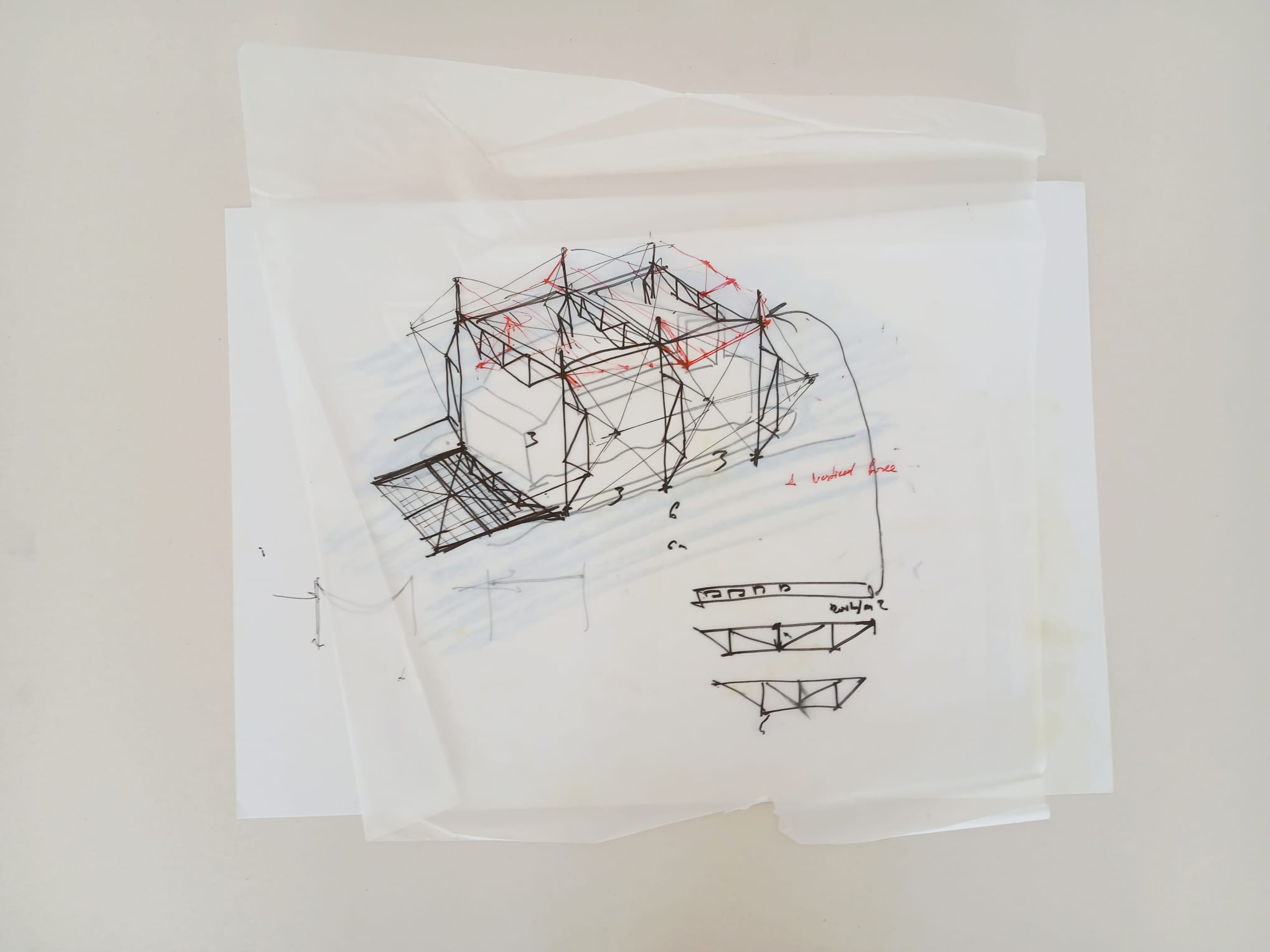
Before the aluminium, there was paper. Arpi Mangasaryan, an architect, studied EXO-01 in her thesis and drew an alternative version of it on tracing paper. We use it as reference and advice: another way of asking the same questions — triangulation, connection points, how the structure meets the hull.
May 2026: the assembly drawing
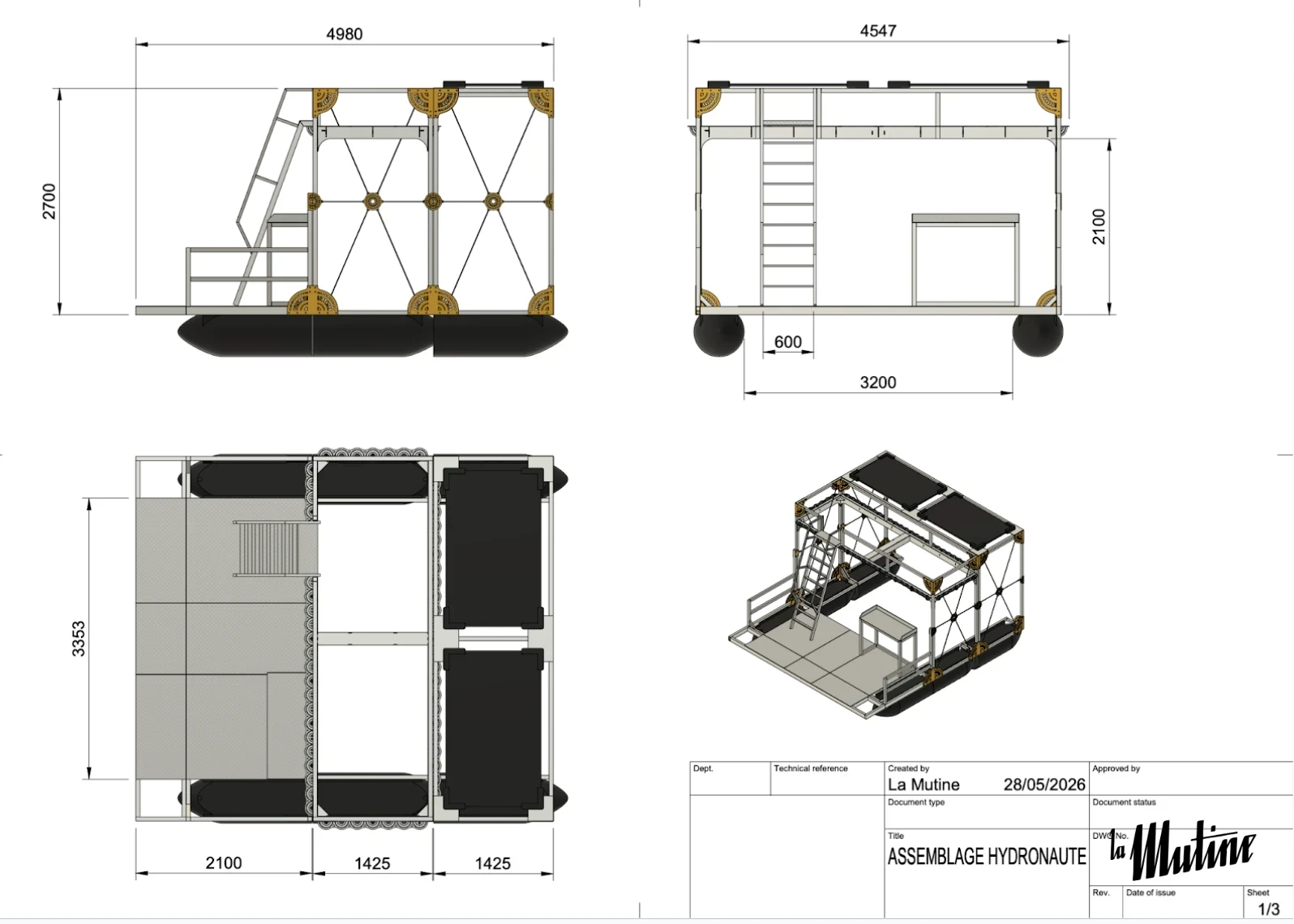
EXO-01 is designed by BIUTOPIC and built with La Mutine, a Nantes fabrication workshop founded in 2011 and a member of the Factotum collective. The "Assemblage Hydronaute" drawing was established with them at the end of May 2026: elevations, plan, isometric view. An X-braced modular structure on floats, a boarding platform, corner plates.
The structure measures 4.98 × 4.55 m and stands 2.70 m above the floats. It sits on six Flofiz floats, 1.60 m long and 0.60 m in diameter, in two rows.
Between the drawing and the first cut: 3D modelling, construction drawings, hardware sourcing, a submission to the engineering office and its adjustments, then fabrication drawings and the raw-material order.
July 2026: the workshop
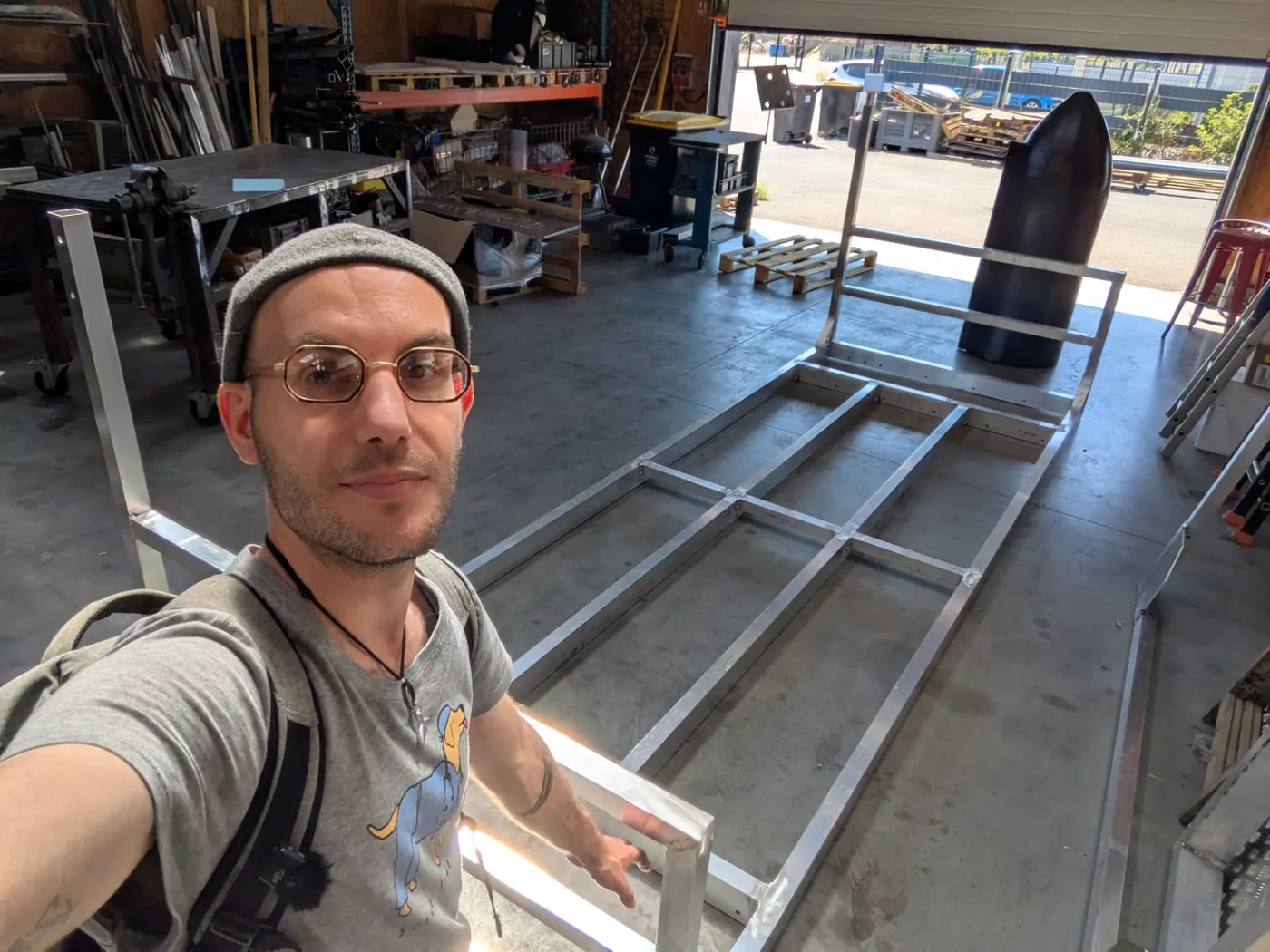
In July, fabrication began. Corner plates and rosettes were cut, the aluminium chassis went together, the structural frames were stood up. At La Mutine, Antoine leads marine fabrication and structures, Maxime prototyping and integration.
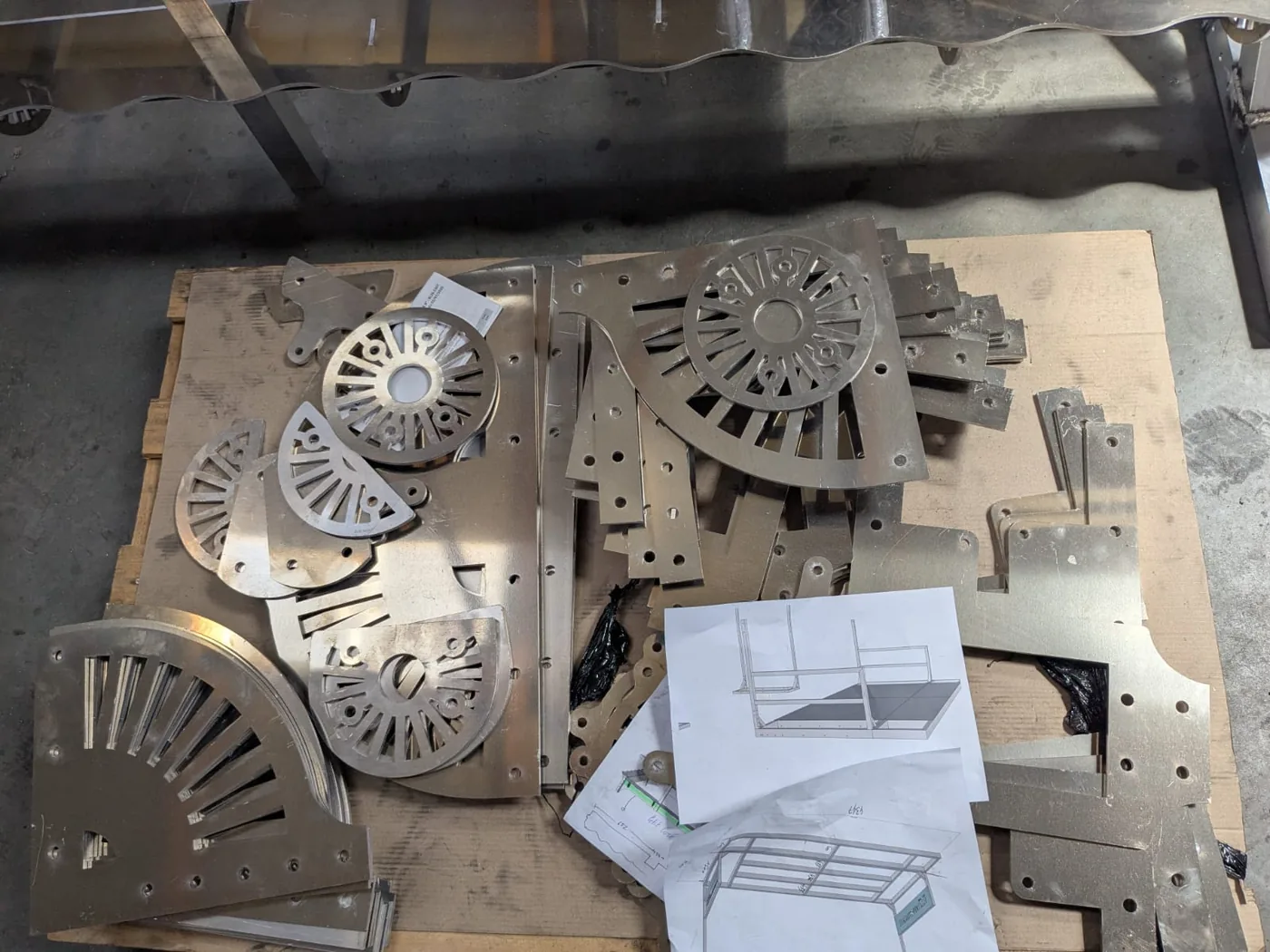
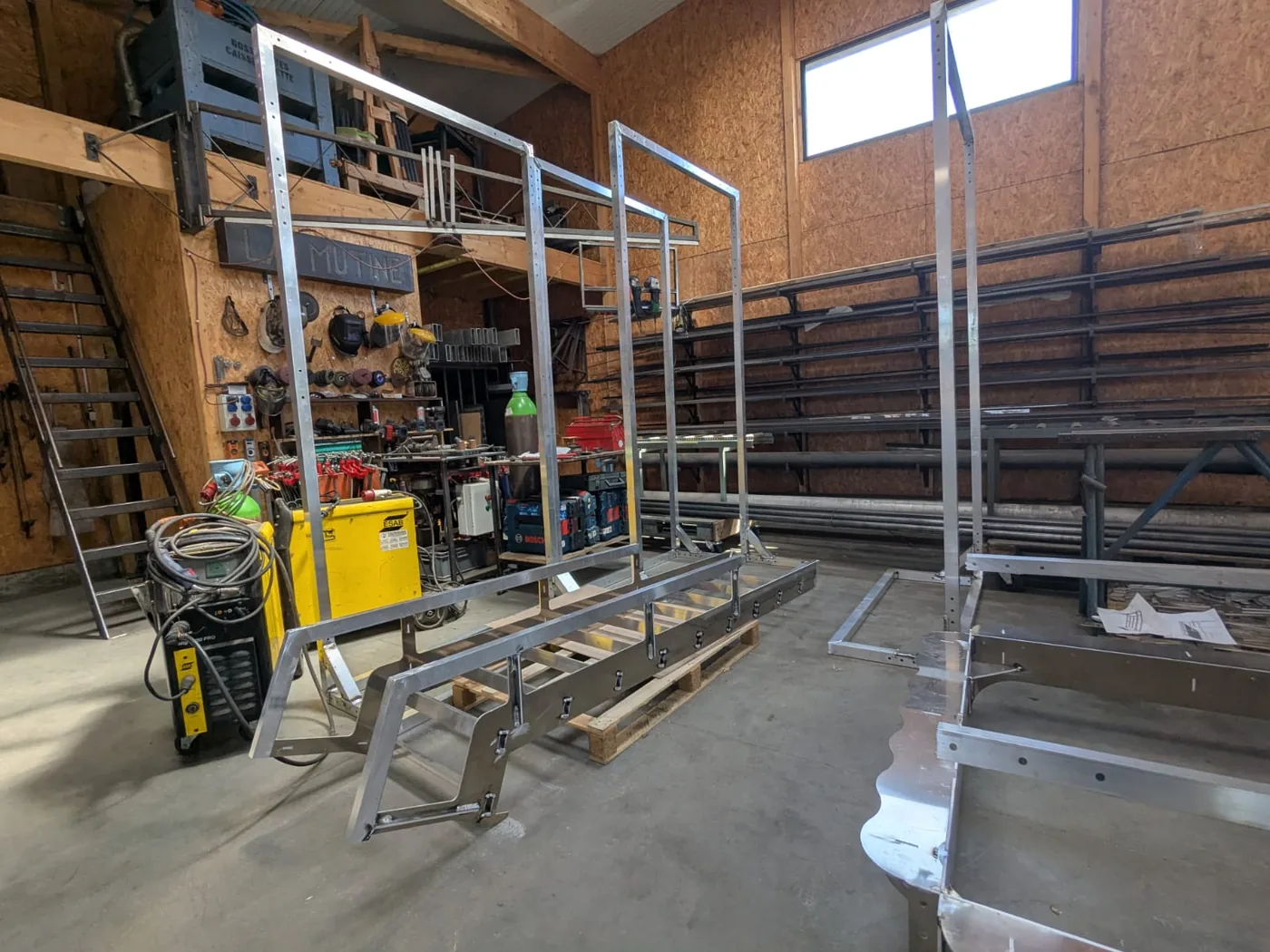
The components have been bought: two 5 kW RDT POD 5.0 electric pods, four 500 W DualSun panels for 2 kWp, two Dyness batteries for 32 kWh. Nothing is installed on the structure yet.
The target functions — solar energy, electric propulsion, lateral stability floats, onboard electronics, interchangeable scientific equipment — will be validated one by one. Assistance and stabilisation remain subject to technical validation, operating limits and crew training.
The image we keep in mind is the hermit crab that fixes anemones to its shell: they protect it, it carries them, and when it changes shell, it takes them along. A structure that settles in, brings something, and stays reversible.
What is left to do
Delivering the structure, electrical integration, then final assembly, which is waiting on the temporary occupation permit for the mooring (AOT). Transferring HYDRO-01's robotics stack — ArduPilot, ROS 2, Jetson-based perception — is planned, subject to technical validation.
Before going further in metal, we ran a numerical model of the whole assembly. What it changed: Simulate before you weld.