
Logbook EXO-01 · exo01-sim v1.2
Simulate before you weld: what the model changed on EXO-01
A floating exoskeleton is easier to correct on screen than with a torch. Before fixing where the masses and mooring lines go, we built a numerical model of EXO-01 coupled to L'Hydronaute. Three things changed.
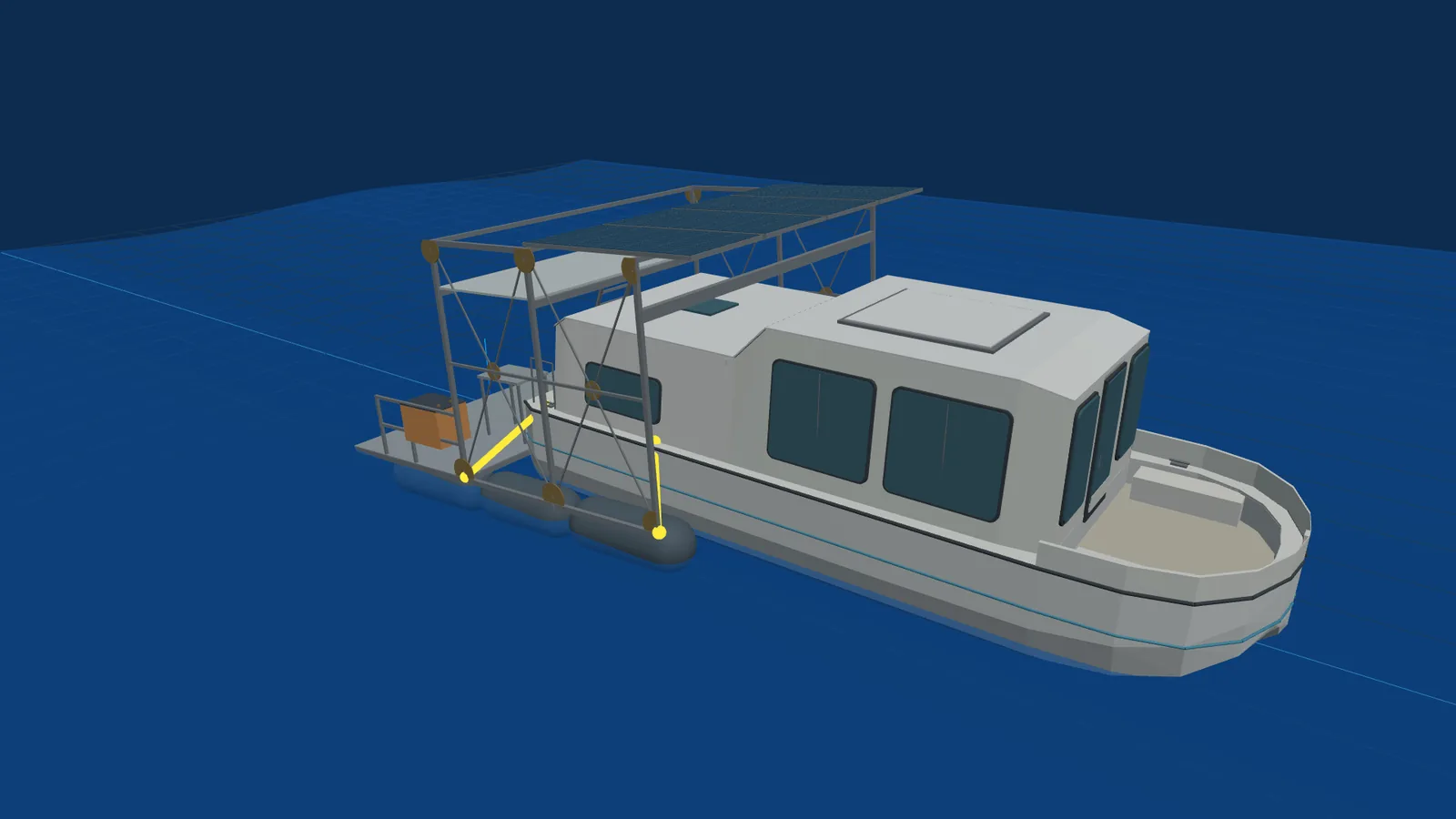
A model, not a measurement
Exploratory study: the model is built on the assembly drawing and on declared masses, not weighed ones. It guides integration; it certifies nothing.
The simulator, exo01-sim, is open Python code: hydrostatics on the float geometry, linear hydrodynamics with Capytaine, mooring lines that only work in tension, design sweeps. 84 automated tests and 31 checks verify it. The code, assumptions and reports are public on GitHub.
The batteries move forward
First result, and the clearest: with the batteries where the drawing put them, on the aft deck, EXO-01 floats stern-down — 3.8° of trim, 0.17 m of freeboard at the aft deck. The cause is geometric: the centre of mass sits about 0.6 m aft of the floats' centre of buoyancy.
Moved forward onto the float stringers, the 240 kg of batteries cancel the unloaded trim: 0°, 0.36 m of freeboard, and roll in a beam sea drops from 4.7° to 3.8°. The layout recommended by version 1.2 goes one step further: batteries on a console beyond the forward post, the electrical cabinet centred on the aft deck, as close to the boat as possible.
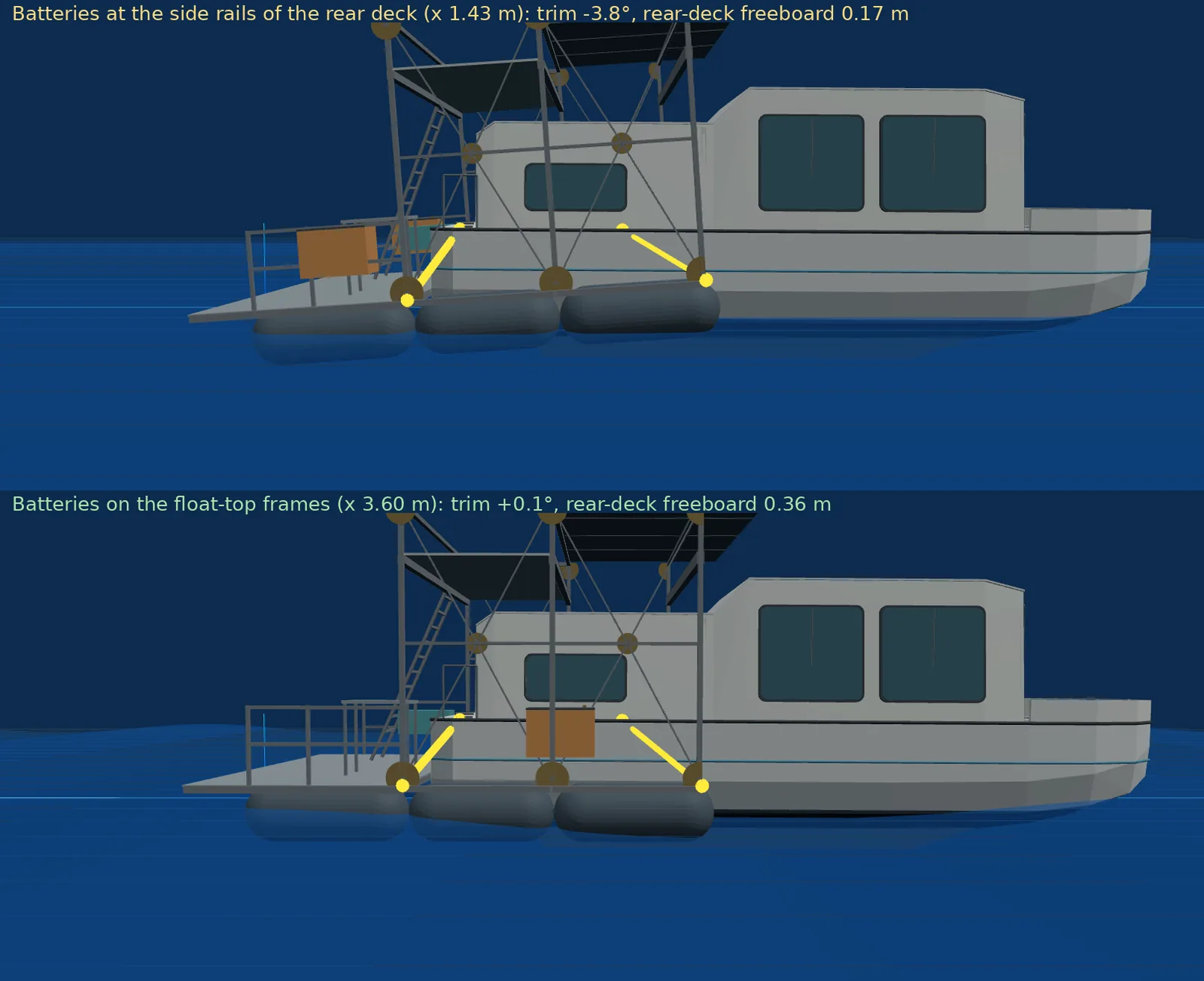
To be checked on the structure: the console carries 120 kg cantilevered on each side, in the spray zone.
Freeboard is what governs
A 4.5 m-wide catamaran on 0.60 m floats is very stiff at small angles: in the simulated configurations, heel is never the limit. The limit is the aft-deck freeboard, which every person standing there pushes down a little further. In the recommended layout, the aft end of the deck is closed to passengers.
In a 0.3 m, 2.5 s beam sea — the order of magnitude of a wake, not a measurement on the Erdre — EXO-01 rolls about 4.5°: the platform follows the surface rather than amplifying it. The moored Hydronaute rolls more, around 8°, because its hull is narrower.
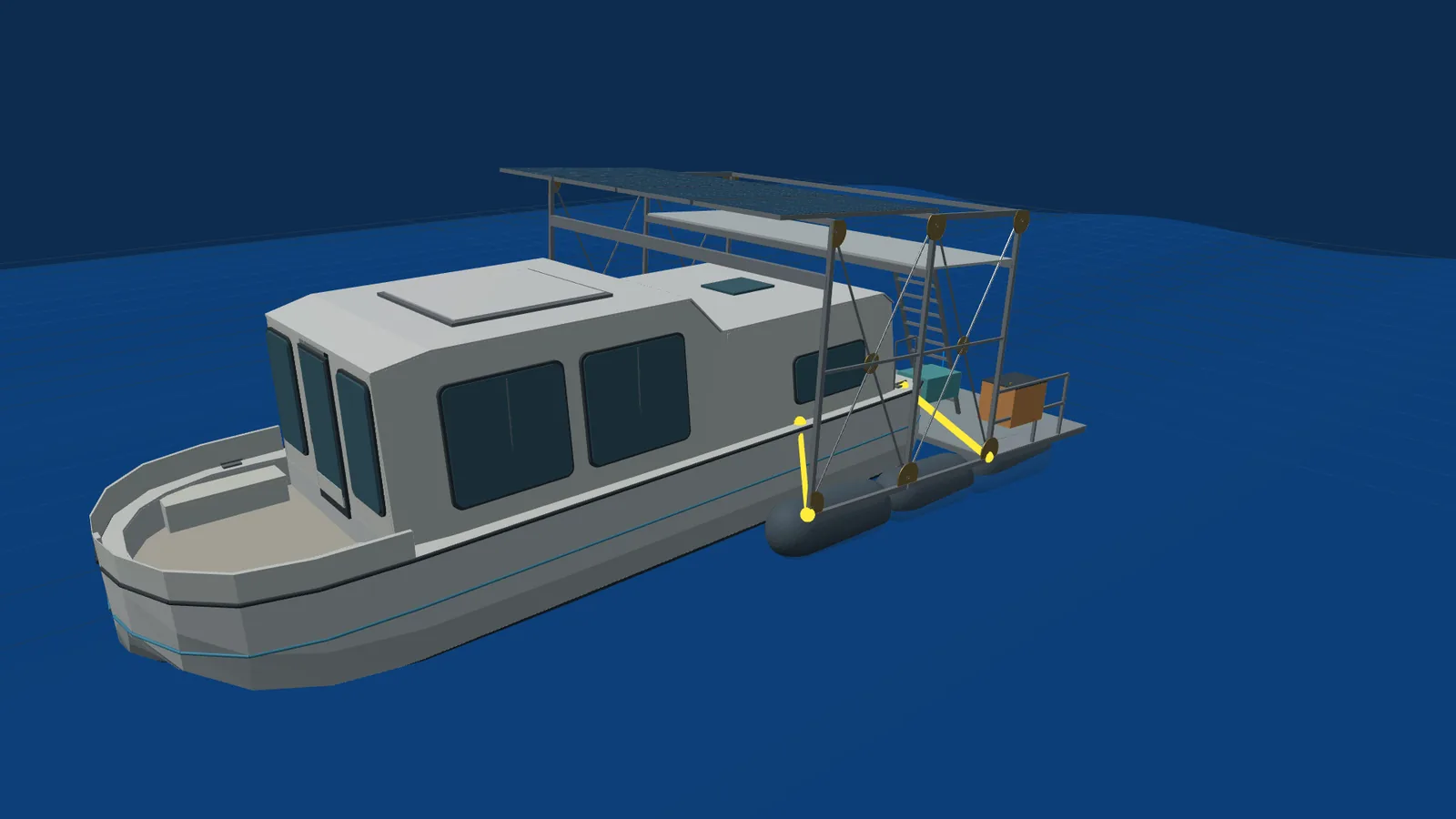
Mooring, redesigned
The drawing had four lines running from EXO-01's posts to the front of the boat. The model shows they hold a tow by L'Hydronaute's engine, but not a push by EXO-01's pods: the forces do not close.
Version 1.2 adds two fenders at the edge of the aft deck, taking the push in compression, plus crossed lines or long diagonals to hold the boat sideways. Another finding: with 100 N of pretension, every line goes slack on each 0.3 m wave, then snaps tight. Direction taken: stiffer ropes, firm fenders, 200 to 400 N of pretension.
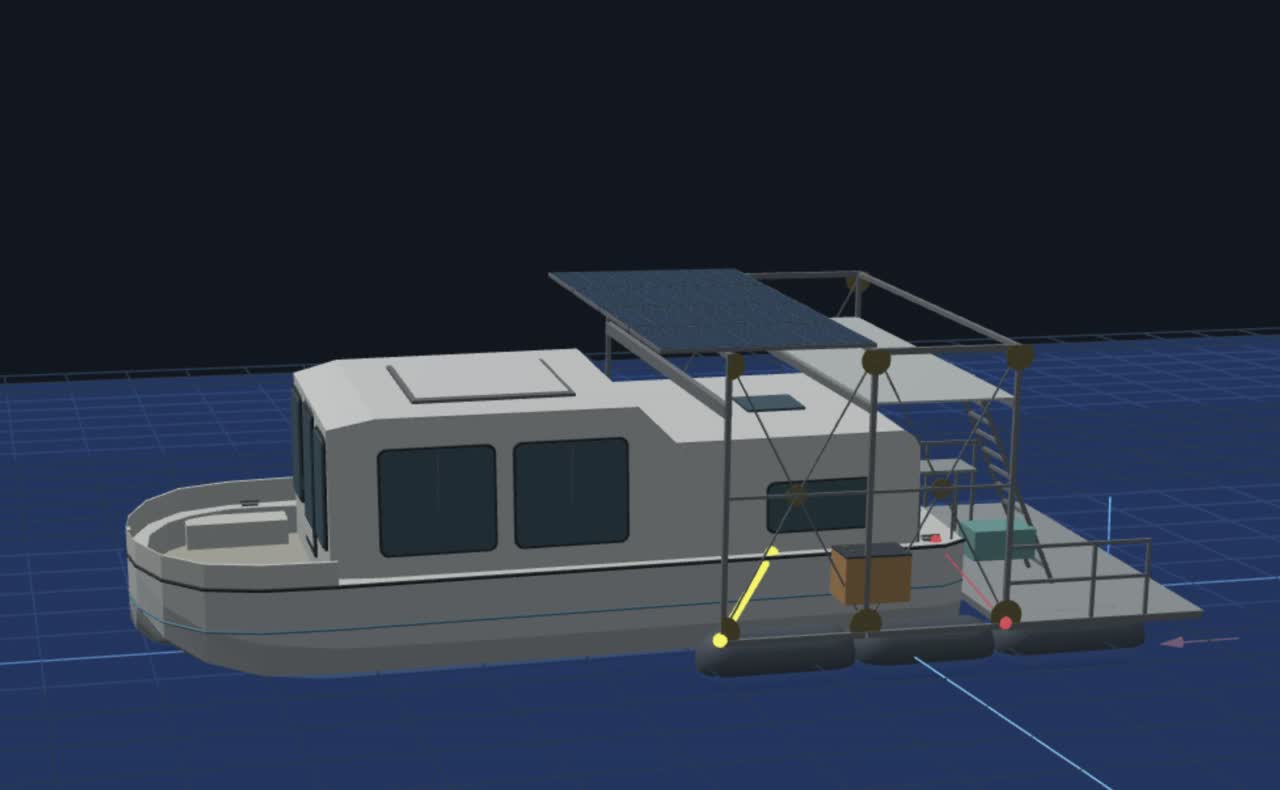
What the model does not know
The masses are not weighed. L'Hydronaute's hull is a reconstruction, not a survey. Damping is assumed. The structure itself is not checked. At the first launch, three measurements will recalibrate the model: weighing, a survey of the floats, a roll-decay test.
The full study, with its methods, figures and limits: EXO-01 in simulation.