
Logbook HYDRO-01 · North Atlantic campaign
HYDRO-01 in the Faroe Islands: two weeks of North Atlantic trials
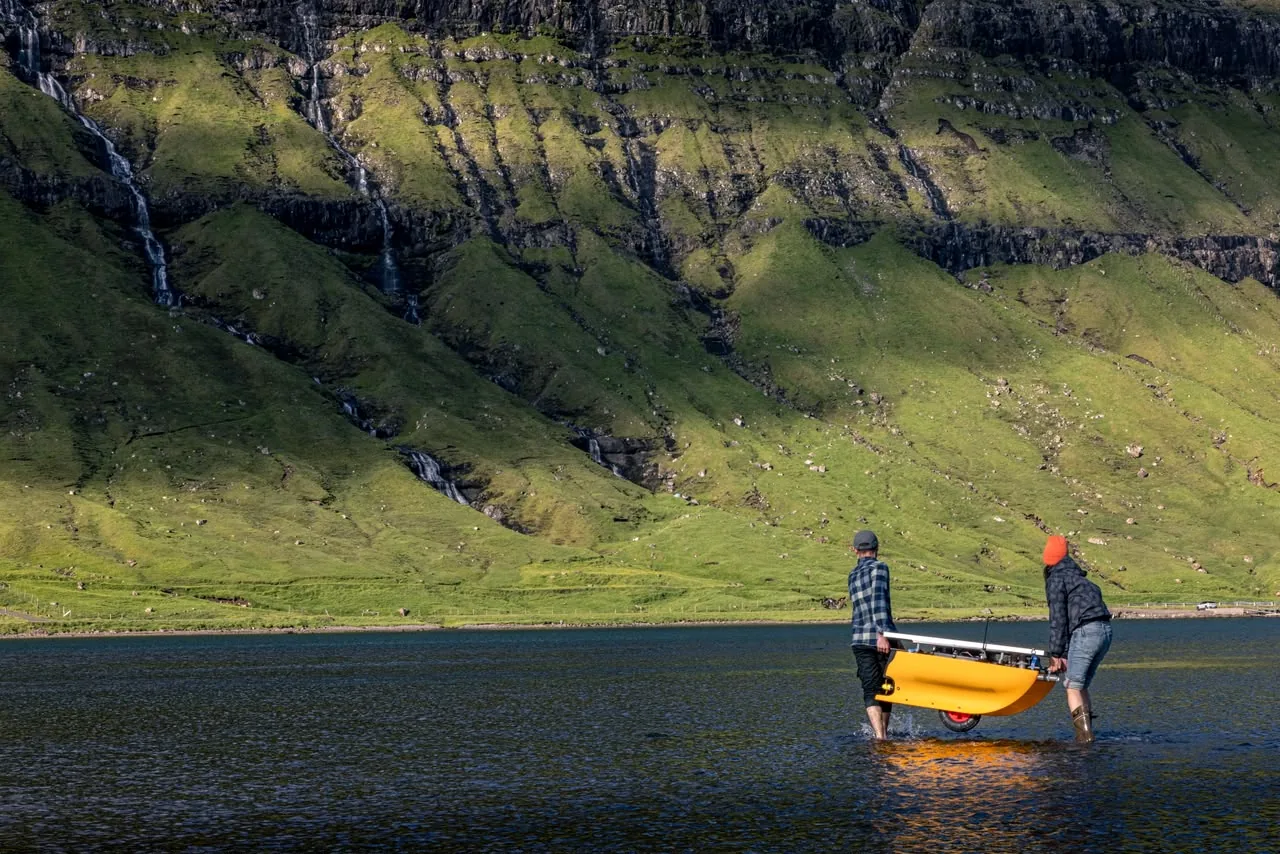
In late June 2026 we put HYDRO-01 in the water in the Faroe Islands. Two weeks, days of around ten hours, one objective: validate at small scale what we will later carry on EXO-01.
Why so far
HYDRO-01 is our surface drone: a Blue Robotics BlueBoat base that we integrated, equipped and programmed — ArduPilot and MAVLink for navigation, ROS 2 for integration, onboard perception on NVIDIA Jetson. It is our test bench. What it teaches us at small scale, we do not have to discover on a much larger platform.
The North Atlantic offered two things the Erdre does not: the near-continuous light of the northern summer, to measure the real yield of the solar chain, and a sea that does not forgive approximations. The boat travelled by road and ferry, from Brittany to Denmark and on to the Faroes. A convoy, not a crossing: the sea trials took place in the archipelago's coastal waters.
Two weeks, one job
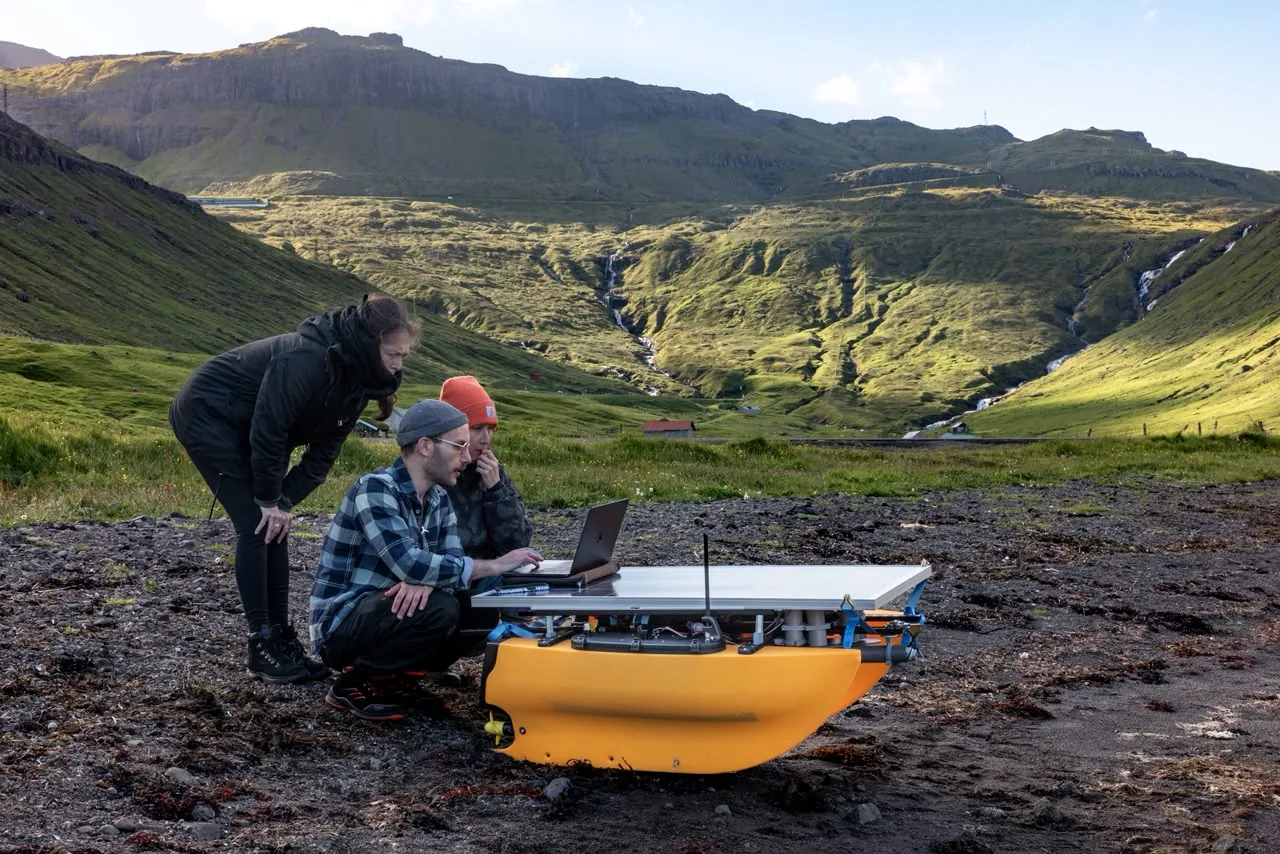
The campaign lasted about two weeks from late June, around ten hours a day, entirely given to HYDRO-01: prepare, launch, navigate, recover, fix, start again. Nobody was paid for those days. David Aznaurov, who leads robotics, AI and data at BIUTOPIC, was part of the team.
We moved the launch point from one island to the next rather than repeat the same sortie in the same place. Each launch was there to test one specific thing.
What we tested
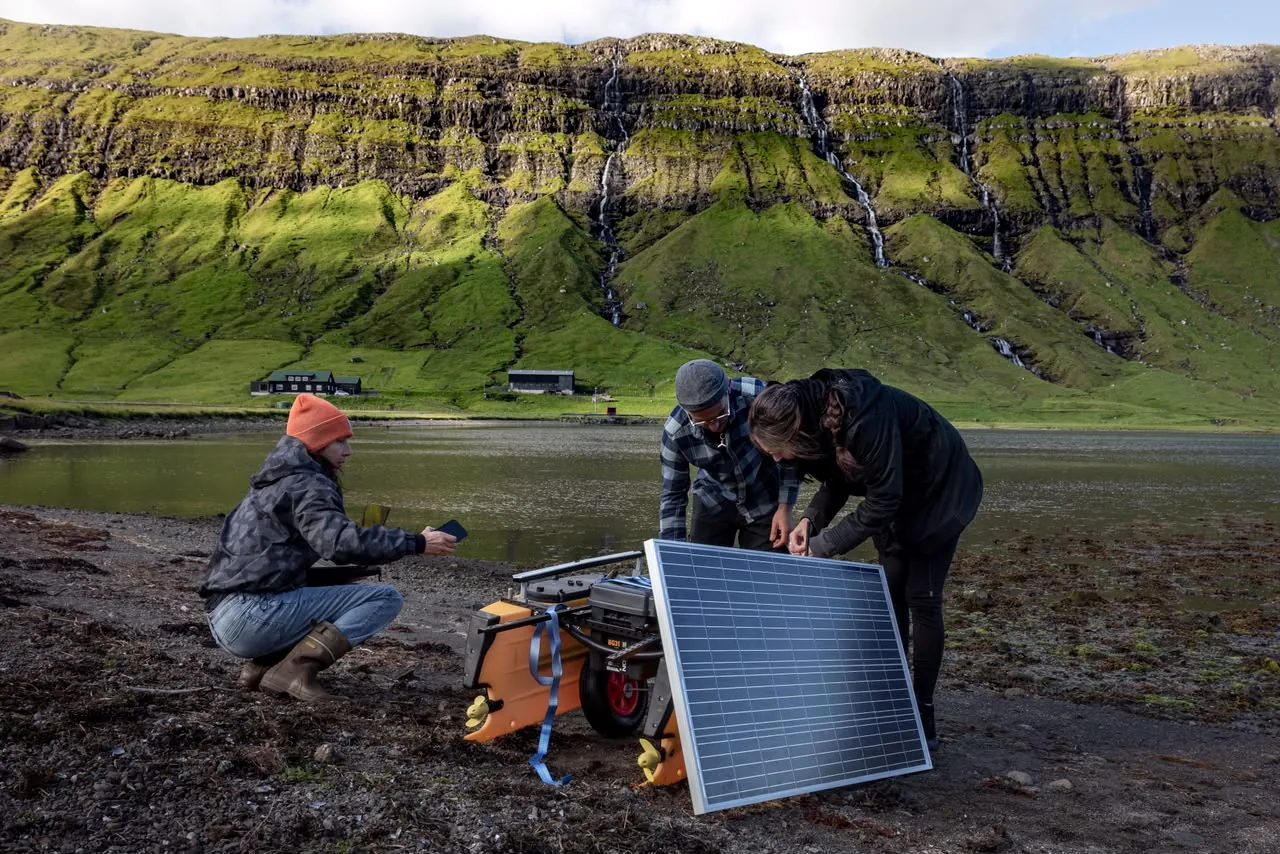
- Launch and recovery
- Remote communications, over a 4G link
- Energy integration: 100 Ah battery, 150 W of solar
- Supervised autonomous navigation
- Equipment endurance
- Payload deployment, including acoustic recorders
The recorders captured the marine soundscape as it is — ambient noise, shipping traffic, signs of life. It is a baseline for measuring the noise footprint of navigation.
What the field taught us
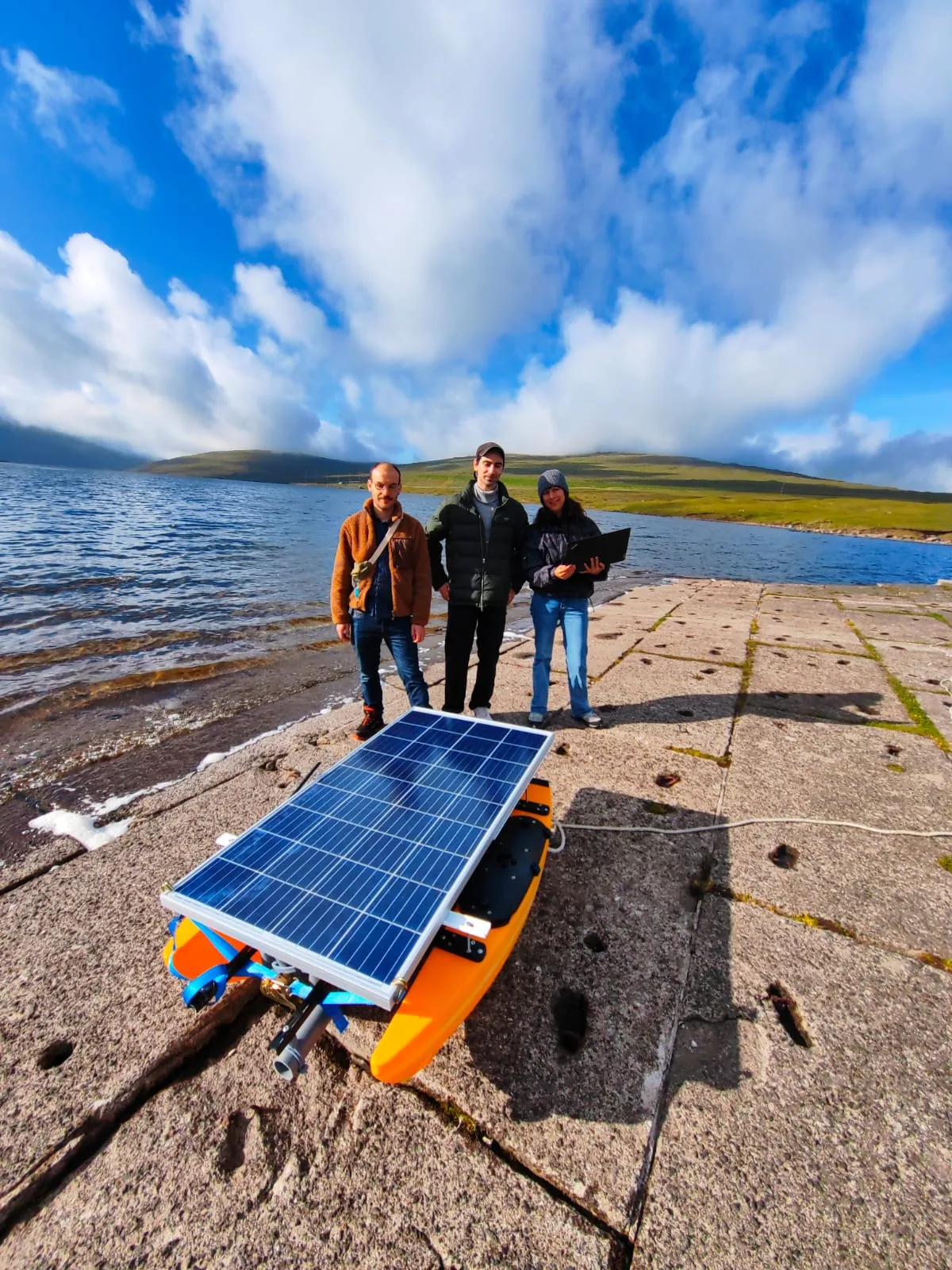
Preliminary learnings: the logs are being consolidated.
Moisture gets in before water does. Cable glands and hatches were reworked. Waterproofing is still at the top of what has to improve.
One link is not enough. We lost the 4G link once; the fallback procedure brought the boat back. A dual link is now a priority.
Cold eats the battery. Usable capacity drops with temperature: we widened the safety margins.
Still to improve: battery-management resilience, communications redundancy, maintenance far from any workshop, and progressive autonomy — always supervised.
The numbers, provisional
Preliminary data
The reconstructed campaign register counts 15 launches, about 170 km in total and 47 hours of navigation, at 3.6 km/h cruise and 6.4 km/h peak. Two incidents, both recovered. A mission's operating envelope is around 15 km, payload and margins included.
These are reconstructed figures, not validated logs. Detailed telemetry — GPS, heading, energy — will be extracted from the black box and published after validation.
What comes next
What held in the North Atlantic is meant to move onto EXO-01: transferring the same software stack — ArduPilot, MAVLink, ROS 2 — is planned. What gave way feeds the design of HYDRO-01's successor, whose first drawings are done. Iceland is under consideration next.
The platform and the campaign register are on the HYDRO-01 page; the specification sheet is in the technical appendix.