
Logbook L'Hydronaute · Erdre, Nantes
L'Hydronaute: a 1987 hull, restored rather than replaced
The leanest boat is the one you do not need to build. L'Hydronaute is a 1987 Renaud 8000: we restored it rather than replaced it, and it is the first boat set to receive EXO-01.
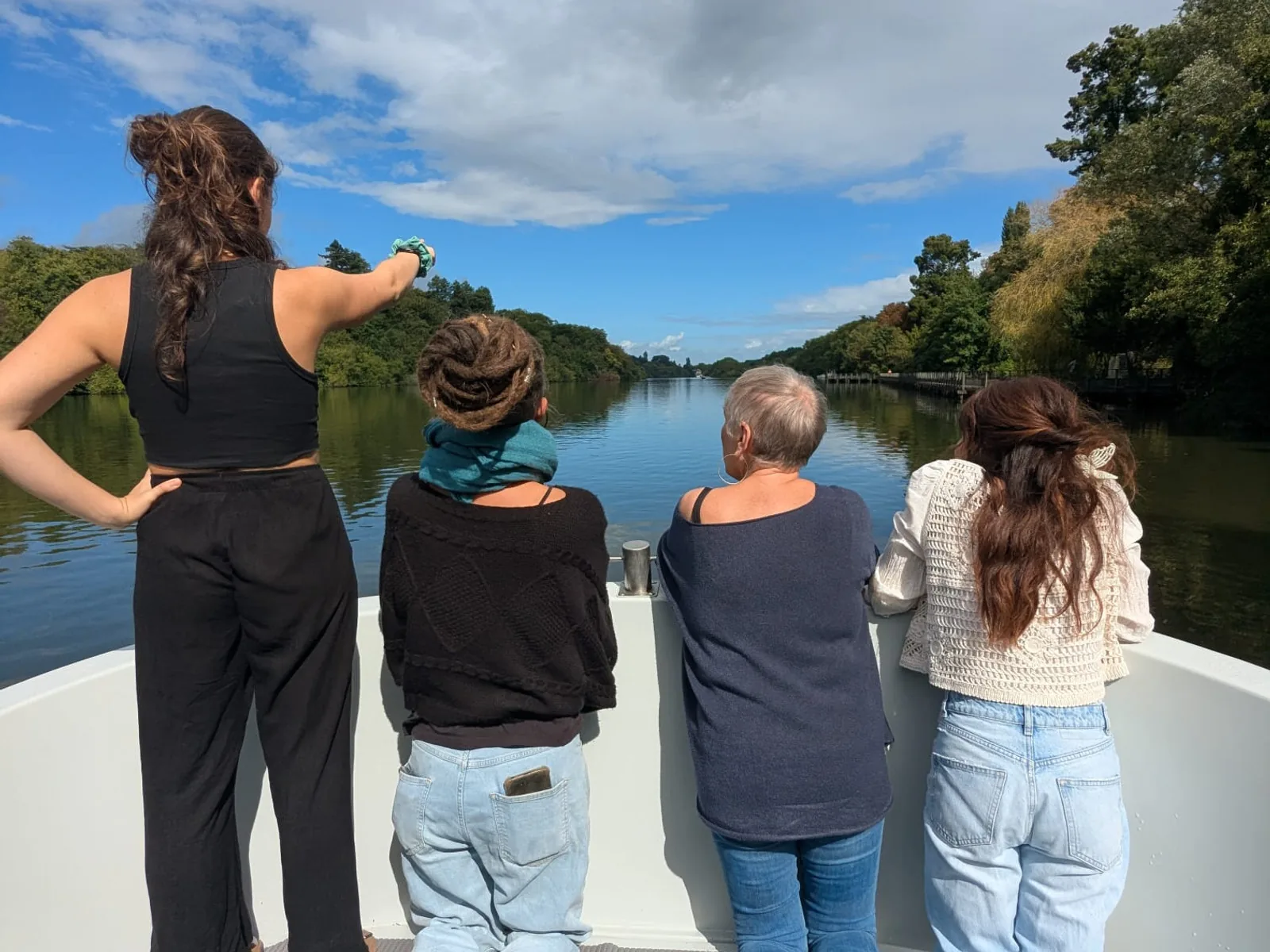
Why an old hull
A hull that already floats is material and work already spent. Keeping it in service instead of building another is the bet of the whole programme; L'Hydronaute is its first full-size demonstration.
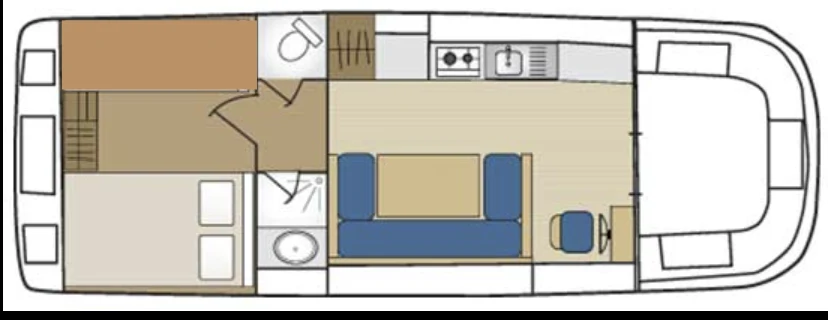
It is a 1987 Renaud 8000 barge: an 8.00 × 2.98 m hull according to the builder's sheet, 0.50 m draught, 1.80 m air draught.
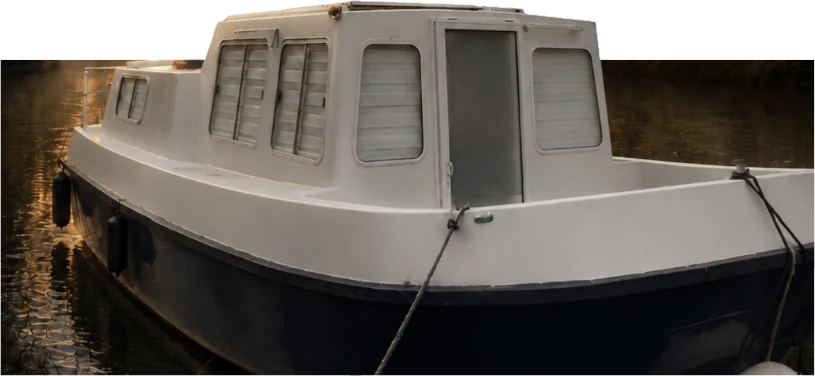
What has been done
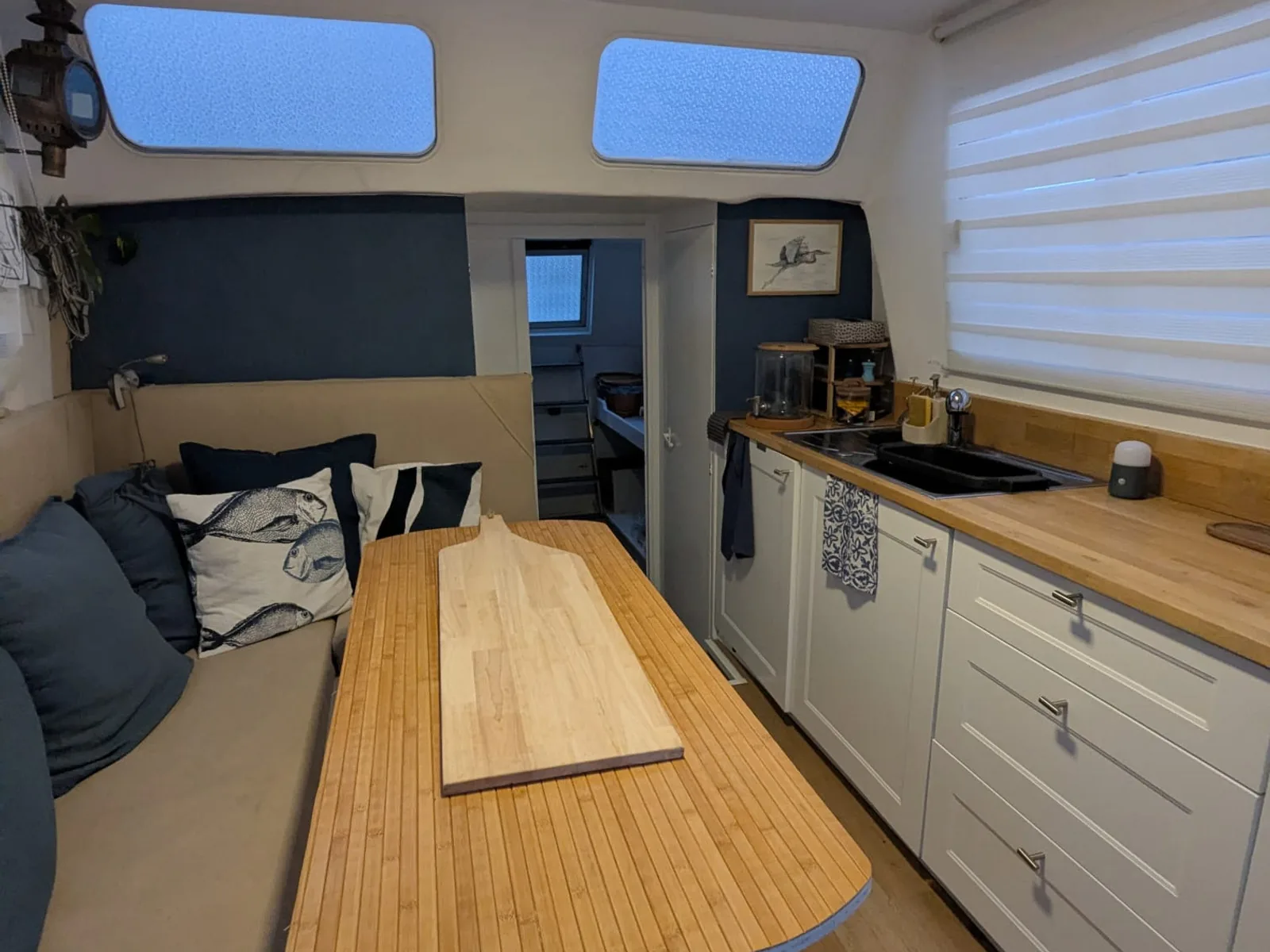
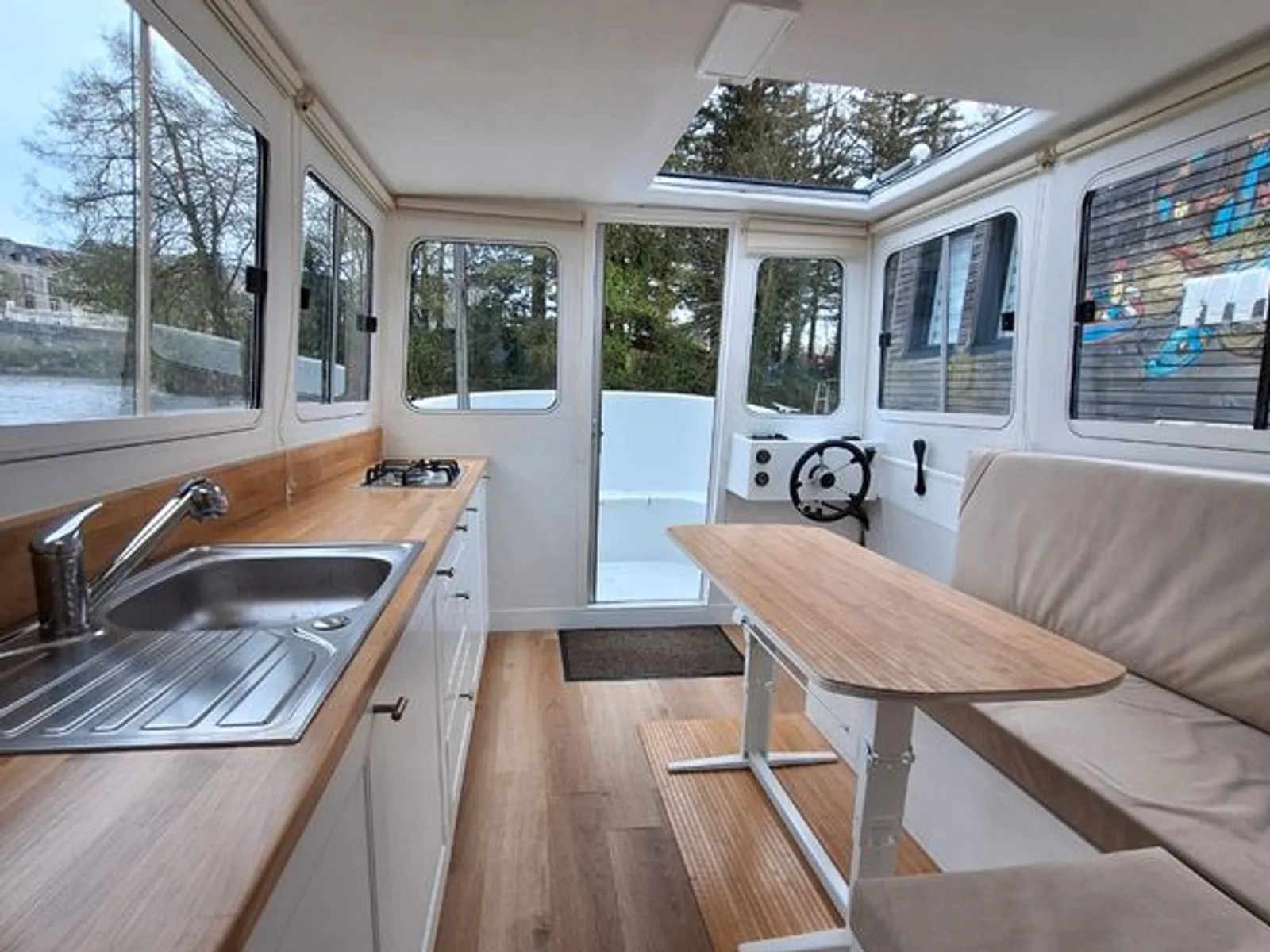
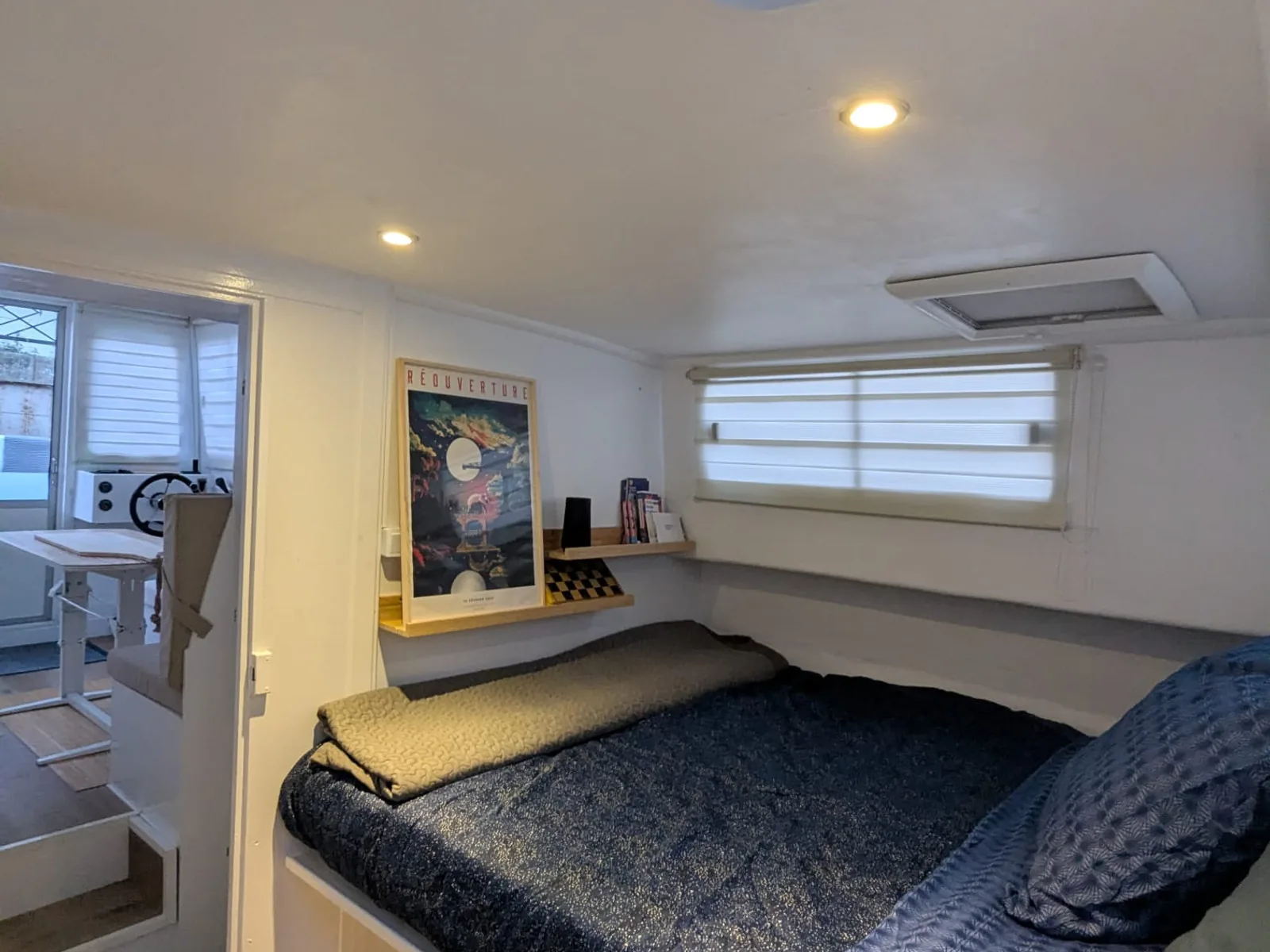
The hull is restored and the base fit-out done: a saloon seating eight with a convertible table, an equipped galley, a double cabin, the helm station.
What it is becoming
L'Hydronaute is the first boat set to receive EXO-01. With the exoskeleton, the whole will measure about 9 × 4.55 m. The structure couples with adjustable self-locking lines, without modifying the hull: the boat keeps its identity, and EXO-01 is meant to bring it electric propulsion, solar energy and sensors.
Its mission: science for aquatic environments — water monitoring, citizen science, access for researchers — on the Erdre, north of Nantes, fifteen kilometres inside a Natura 2000 area. It will be run by a qualified crew who hold the licence; participants will be able to take the helm under supervision. Up to 8 participants plus the skipper: passenger boarding was validated in writing by the DDTM for 12 people, and we keep the margin.
One sailing, several programmes
It is not a pleasure boat. A single sailing is meant to carry research, baseline data, robotics and citizen science, and research comes before everything else. Depending on the mission, on board:
- environmental observation and water-quality measurements — conductivity, temperature, turbidity
- supervised sampling, microplastics included
- mission planning and reading the collected data
- supervised interaction with the HYDRO-01 autonomous platform
For microplastics, the intended chain is: sampling, separation and concentration by density in a hydrocyclone, collection, then analysis on board or in a laboratory. No promise of total removal: performance depends on configuration, flow rate, particle size and density, and water conditions.
An abandoned hull can become a reef: life moves in. This Renaud 8000 follows a similar path — restored rather than replaced, it becomes a platform for research.
What is still missing
Entry into service remains subject to the temporary occupation permit for the mooring (AOT), insurance, and final validation of the technical configuration. No booking and no deposit are taken until that framework is confirmed.
To hear when it opens: the boat's page.